CoreWeave has provided a top-to-bottom technical walkthrough of its AI platform. May Olatoye, Director of Product Marketing, and Tara Madhyastha, Senior Solutions Architect at the company, guided viewers through every layer of the infrastructure, from the physical data centres to the tools development teams use to build and monitor models and agents.
The company positions itself as a provider of infrastructure built specifically for large-scale AI workloads. While major cloud providers offer general-purpose compute capacity, CoreWeave focuses on GPU-intensive tasks such as model training and inference at scale. The session offers a detailed picture of how the platform is technically structured and the choices that have been made along the way.
Physical layer: data centres and GPU clusters
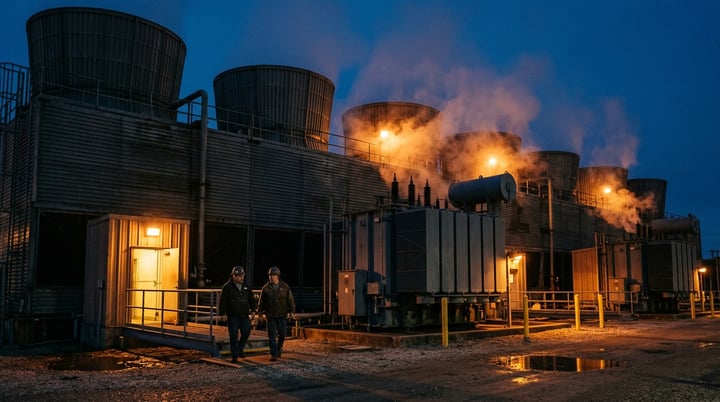
The foundation of the platform is what CoreWeave itself calls 'AI-native data centres'. The emphasis is on high density, fast interconnects between GPU nodes, and early access to new GPU generations. The company says it is growing to more than 40 data centres with a total power consumption of over 850 megawatts. For context, an average large Dutch data centre typically consumes several tens of megawatts.
This scaling approach is relevant for customers that need large clusters for training foundation models or running heavy inference workloads. In such workloads, latency and bandwidth between GPU nodes are limiting factors; CoreWeave says this was a specific design consideration.
Storage: proprietary object storage and a patented transport layer
For data storage, CoreWeave offers both object storage and file storage, both described as tuned for AI use cases. One specific component is the Local Object Transport Accelerator, abbreviated as LOTA, for which the company has filed a patent. LOTA is designed to deliver data with low latency directly to GPU nodes, a bottleneck that can arise during large training runs when storage and compute are not well aligned.
The combination of proprietary storage and proprietary compute allows CoreWeave to optimise the full data pipeline, something that is more difficult when storage and compute are sourced from different providers. Whether and to what extent LOTA makes a practical difference compared to common alternatives cannot be independently assessed on the basis of the session.
Orchestration: Kubernetes on bare metal
For workload management, CoreWeave uses its own Kubernetes service, CoreWeave Kubernetes Service (CKS). This runs on bare metal, meaning there is no additional virtualisation layer between the orchestration software and the hardware. This reduces overhead and gives teams more direct control over how resources are deployed.
Kubernetes is the industry standard for managing container workloads, but most cloud implementations add an abstraction layer. CoreWeave deliberately takes a different approach, which offers more configuration options but also requires greater expertise from users.
Model development and experiment management via Weights & Biases
On the model development side, CoreWeave integrates with Weights & Biases (W&B), a widely used platform for tracking experiments, model versioning, and governance around the training process. Through W&B Models, teams can compare, reproduce, and document training runs, supporting faster iteration and better oversight for teams developing multiple models in parallel.
The integration with an external platform such as W&B is notable: it demonstrates that CoreWeave does not build everything in-house, but instead opts to collaborate with specialised tooling that is already widely adopted in the AI community.
Mission Control: operational context for training teams
One of the newer components of the platform is CoreWeave Mission Control, which the company describes as the operational standard for AI on its cloud. The system combines signals from the infrastructure and running workloads into an operational overview for teams.
Concretely, the session demonstrated an AI assistant that can help diagnose slow training runs or issues with GPU nodes in real time. Training runs for large models can take weeks; early detection of bottlenecks or faulty hardware can therefore save considerable compute time and cost. How Mission Control compares to existing monitoring solutions in production environments was not assessed during the session.
For teams in the Netherlands and Europe working on large-scale model training, the combination of integrated monitoring and direct GPU infrastructure is relevant, particularly now that demand for AI compute regularly outpaces GPU availability at general-purpose cloud providers. CoreWeave is active in the United States and is expanding into Europe; whether and when specific capacity will become available for Dutch or EU customers was not specified in this session. For European founders and investors making infrastructure decisions, it is nonetheless useful to understand which layers distinguish a specialised AI cloud platform from a traditional cloud environment.