Anyone managing a portfolio of wind or solar parks faces the same question every day: how much electricity will the installations produce tomorrow, and what is that electricity worth on the European energy market? The answer determines whether you turn a profit or pay imbalance costs. Dexter Energy, founded in 2017 in Amsterdam, builds software that answers that question for energy companies in an automated and continuous manner.
The company now employs more than 50 people, works with over eighty energy companies and supports a combined capacity of approximately 30 gigawatts of renewable and battery assets spread across thirteen European countries. In July 2025, Dexter closed a Series C round of €23 million, led by Alantra's energy transition fund Klima, with participation from Mirova and existing investors ETF Partners, Newion and PDENH. Total capital raised now stands at approximately $41 million.
From weather data to trading signal
The core of Dexter's platform is the integration of two functions that energy companies have until now often managed in separate systems: power forecasting (how much electricity will I produce?) and price forecasting (what does a megawatt-hour cost or yield at this moment?). By integrating these two layers, the software can continuously assess what the most favourable trading strategy is on the day-ahead, intraday and balancing markets.
To do this, the system processes large volumes of weather data, market prices and technical data from the assets themselves, such as solar panels, wind turbines and battery storage systems. Fons de Leeuw, co-founder and responsible for the meteorological data strategy, leads a team focused specifically on how that weather data feeds into the models as accurately as possible. Independent forecast benchmarks in Europe consistently rank Dexter's wind and solar energy forecasts in the top three.
Clients such as Centrica Energy, Pure Energie, Luminus and Sunrock use the platform. According to the company, they achieve savings of between ten and 25 percent on imbalance costs, the costs energy companies incur when the volume of electricity they deliver deviates from what they had previously declared to the grid.
Built on a substantive background
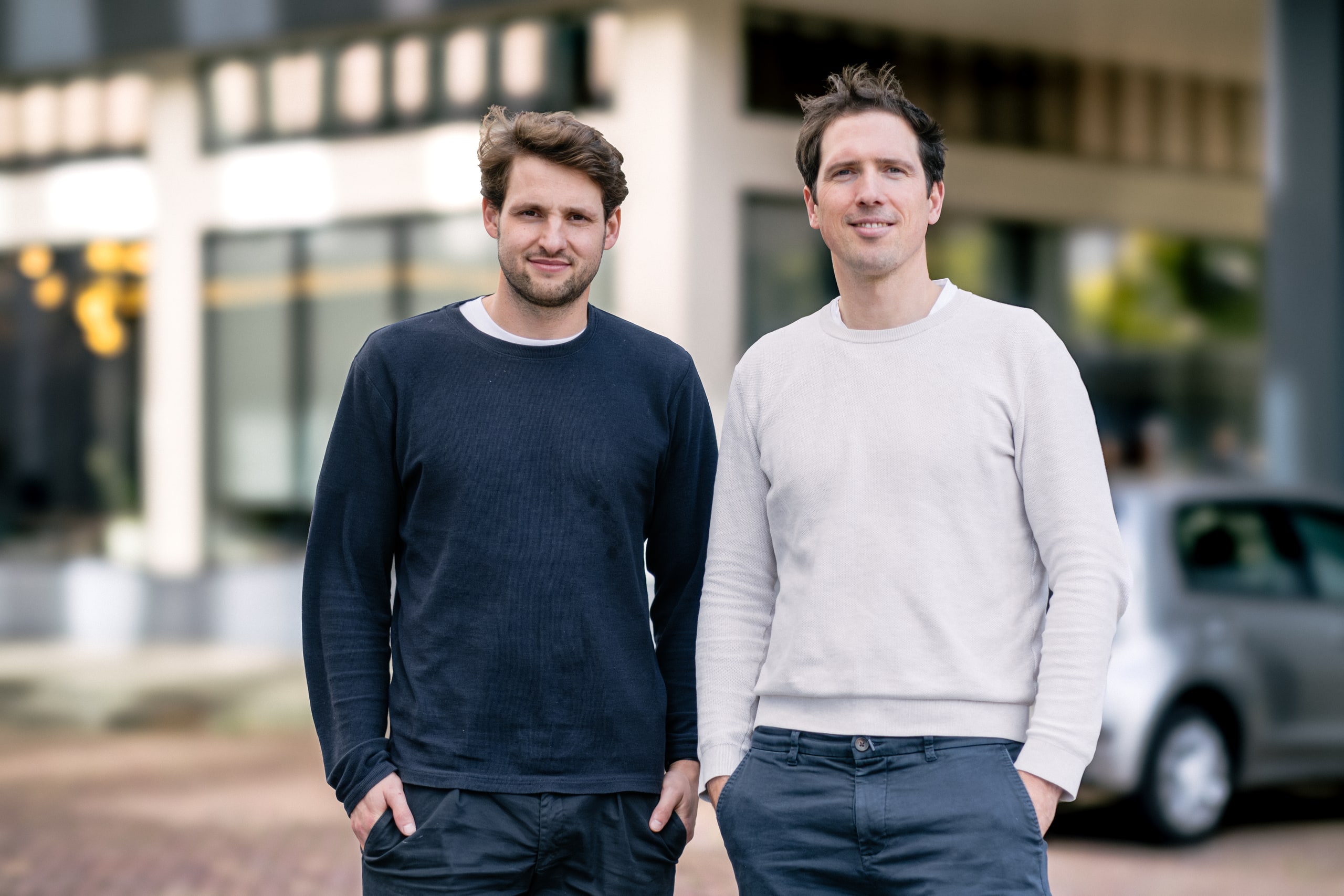
CEO and founder Luuk Veeken studied Energy Science at Utrecht University. That background is visible in how the company has positioned itself: not as a generic data business, but as a specialist in the specific complexity of short-term energy trading. Co-founder Hubert Penn, who leads the product side, holds an engineering degree. Giuseppe Procaccianti is responsible for technology as CTO.
Dexter started in 2020 with a first external funding round of €2 million, led by Newion, with participation from early backers including investor PDENH. In 2023, a Series B of €10.5 million followed, led by ETF Partners and Astelia. Growth since then has been substantial: the company reports more than one hundred percent year-on-year revenue growth over recent years, with annual recurring revenue of $23.3 million in 2025. Dexter also participated in the TotalEnergies On-accelerator and works with technology partners Google Cloud and Xebia.
Why short-term trading is becoming increasingly important
As the share of renewable energy in the European electricity grid grows, the unpredictability of supply increases. Wind does not always blow when it is convenient, and the sun does not shine on demand. This variability makes short-term markets, where parties can correct deviations from their planned production, ever busier and more complex. At the same time, battery storage systems are becoming an increasingly common component of energy portfolios, complicating optimisation further.
For many renewable energy producers, particularly mid-sized ones, building the necessary data infrastructure and modelling expertise in-house is challenging. Dexter targets precisely that group: companies that are active in the energy market but prefer to outsource the complexity of forecasting to specialised software.
For the broader European energy transition, this type of software is a tool that determines how efficiently renewable capacity is actually deployed. The fact that Dexter, operating from Amsterdam, now serves thirteen European countries and attracts major investment funds such as Mirova and Alantra demonstrates that there is a market for specialised European energy tech companies beyond the traditional energy capitals. For other Dutch founders in the energy sector, it serves as an example of how domain knowledge combined with scalable software can build a European client base.