Euclyd has nothing on the market. Its first two systems are due to reach customers in 2028, with two more following in 2029. Yet on 15 September 2026 the Eindhoven company announced a Series A of more than €200 million, roughly $231 million. The company was founded in 2024 and raised less than €10 million in its seed round [1]. So investors are not buying revenue here. They are buying a thesis about where AI will hit its limit, and who gets to remove it.
A chipmaker backing a challenger
Samsung, Somerset Capital Partners, the Scaleup Europe Fund managed by EQT, and Innovation Industries co-led the round. EIFO, imec.xpand, Brabant Development Agency (BOM) and Quadri joined them [2][3]. The first name on that list says the most. Samsung is a chip company in its own right, and CNBC framed its move as backing a rival to Nvidia at a time when GPU alternatives attract serious money [4].
Euclyd's architecture rests on processor-memory co-design [5]. My reading, not something Samsung has said: a memory giant has good reason to fund designs in which memory becomes more central to AI compute, not less. Samsung's own explanation stays general.
"The next phase of AI will be defined not only by model innovation, but also by the efficiency and scalability of its infrastructure." Dede Goldschmidt, Senior Vice President, Samsung Electronics [2]
The round also overshot the company's own target. In April, founder and CEO Bernardo Kastrup said Euclyd wanted to raise €100 million [6]. It closed at more than twice that.
The hundredfold question
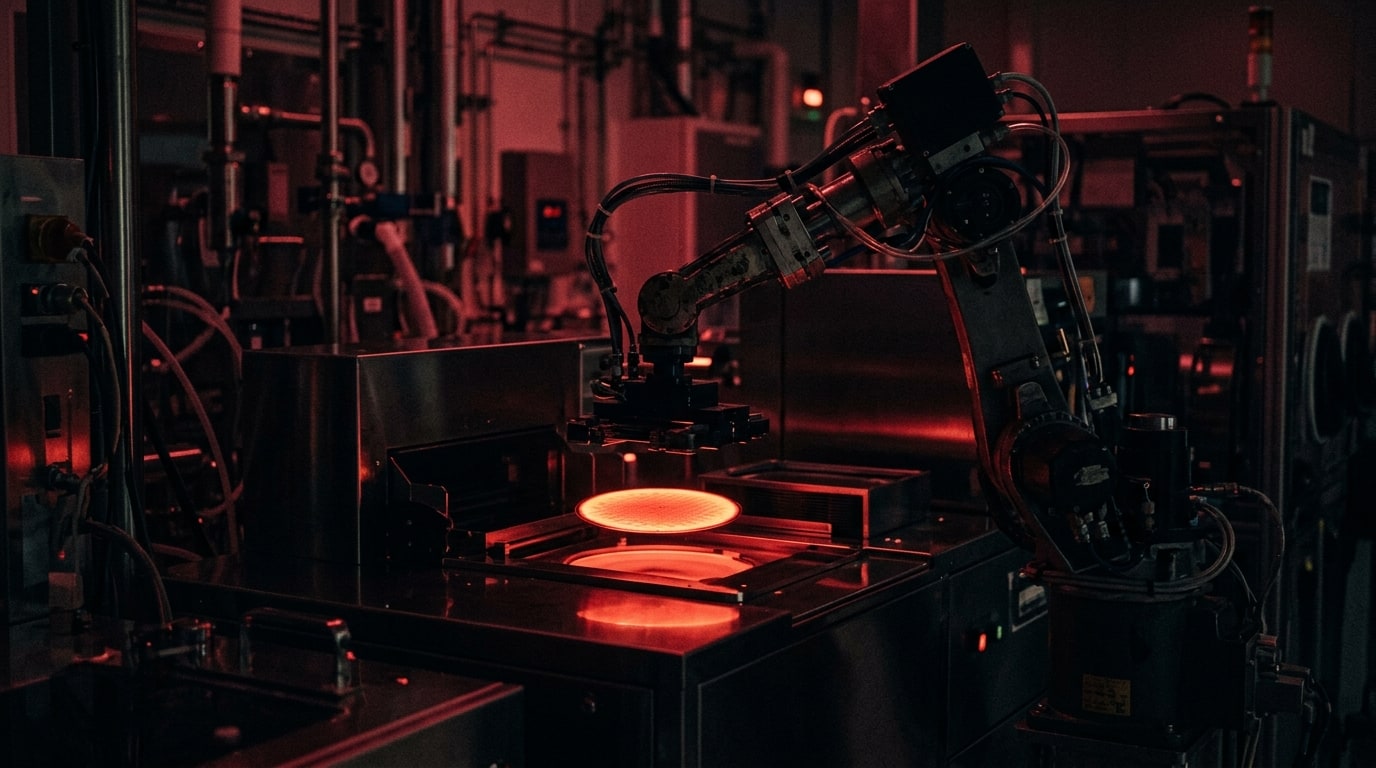
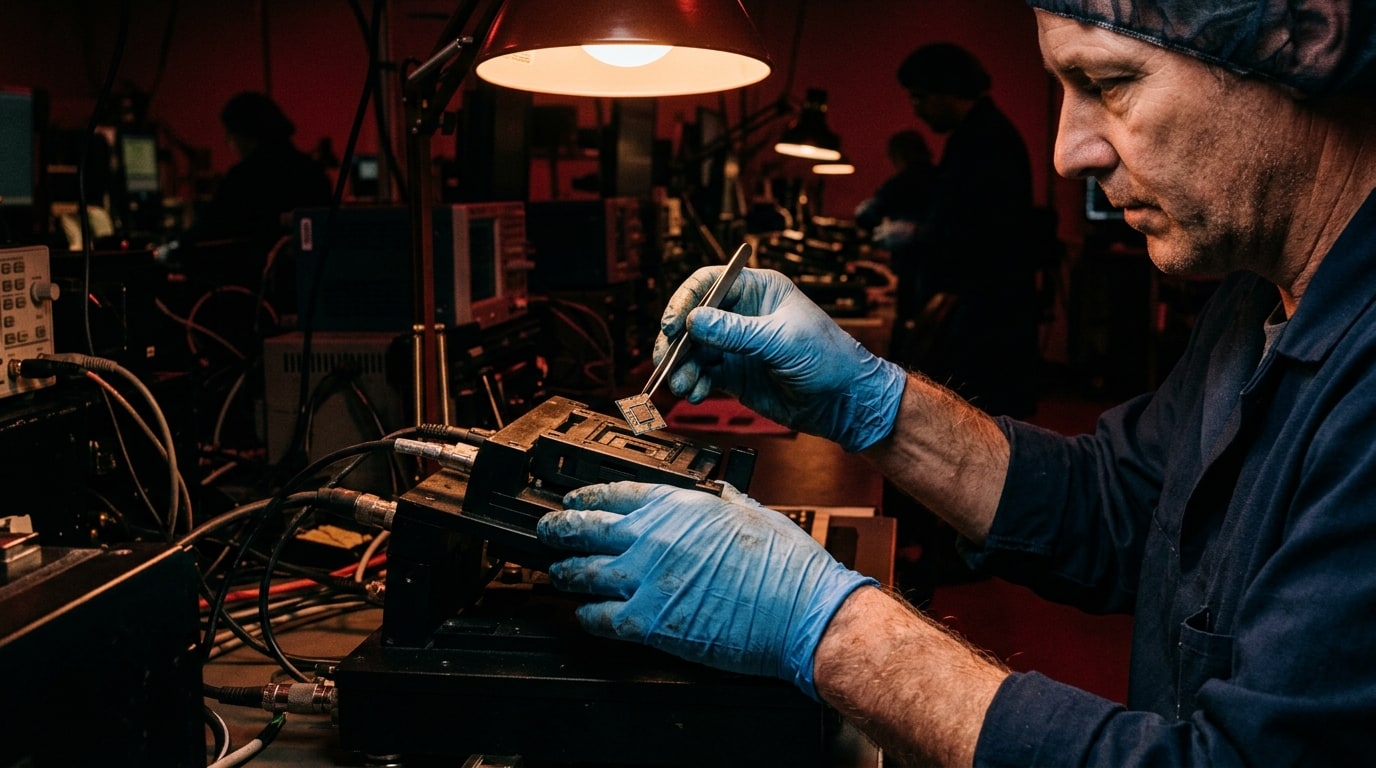
Euclyd builds for inference, the stage where a trained model produces answers and decisions [6]. Its craftwerk chip is marketed as "the world's first agentic AI silicon", and its craftwerk station CWS as "the world's lowest-power exascale AI factory" [5]. The system delivers 32 petaflops of compute from 16,384 proprietary processors in a multi-chiplet design. The company claims it is up to a hundred times more energy-efficient for inference than Nvidia's Vera Rubin chips.
That number has not been validated at commercial scale. This is the real story. Energy is turning into the scarce input of AI, and a factor of a hundred would reshape the economics of every data centre running large models. But a claim made on paper, two years before delivery, measured against a competitor that keeps shipping new generations, is a moving target. Nvidia will not stand still until 2028.
Kastrup frames the problem as structural rather than incremental:
"AI is becoming a foundation of economic growth, scientific discovery, and national competitiveness, but its potential will remain constrained unless we fundamentally change the infrastructure beneath it." Bernardo Kastrup, founder and CEO, Euclyd
ASML's shadow over Eindhoven
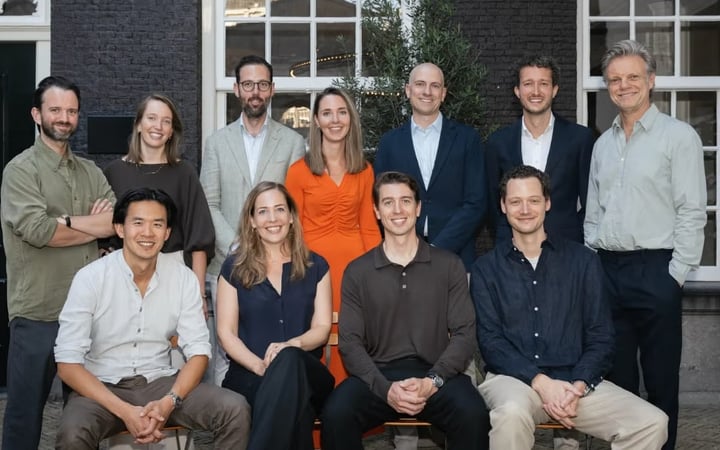
The people behind Euclyd read like a Brainport family tree. Kastrup previously worked at Philips Research, Silicon Hive and ASML. Atul Sinha co-founded the company. Peter Wennink, former president and CEO of ASML, now chairs the board. Advisers include Federico Faggin, inventor of the microprocessor, and Steven Schuurman, founder of Elastic. The company is based at the High Tech Campus and runs a second office in San Jose.
That network matters. A chairman with Wennink's record opens doors with suppliers, governments and large customers that a two-year-old startup would otherwise knock on for years. Still, a famous name does not tape out a chip. The funding is earmarked for expanding engineering, accelerating the silicon and systems roadmap, strengthening partnerships and preparing commercial deployment across enterprise, sovereign and hyperscale markets.
Wennink himself points at Europe's industrial base:
"Europe possesses world-class capabilities across semiconductors, advanced manufacturing, and systems engineering." Peter Wennink, Chairman, Euclyd
He is right about the capabilities. The open question is whether Europe can turn them into a chip company, rather than only supplying the machines that others use to make chips.
What is at stake
Euclyd says it is in talks with four potential customers and aims for thousands of enterprise customers by 2030. Put those numbers next to each other. Four systems delivered by the end of 2029, then thousands of customers one year later. The distance between those two points is where this company will be judged.
If the efficiency claim survives real silicon, Eindhoven gets something it has long lacked: a homegrown answer to the question of who designs the chips, not just who builds the lithography machines. If it does not, €200 million will have bought an expensive lesson in how hard it is to challenge Nvidia from the outside. For now, Europe's AI ambitions have one more serious bet on the table, and this one has a delivery date.
---
References
[1] DutchStartup.AI (2026). Eindhoven chip company Euclyd raises €200 million for AI inference chip. https://www.dutchstartup.ai/en/news/eindhoven-chip-company-euclyd-raises-200-million-for-ai-inference-chip
[2] EUCLYD via PR Newswire (2026). EUCLYD Raises Over €200 Million to Break the AI Efficiency Wall. https://www.prnewswire.com/news-releases/euclyd-raises-over-200-million-to-break-the-ai-efficiency-wall-302878043.html
[3] EU-Startups (2026). Dutch AI chip startup EUCLYD lands €200+ million Series A, taps ex-ASML chief Peter Wennink as Chairman. https://www.eu-startups.com/2026/09/dutch-ai-chip-startup-euclyd-lands-e200-million-series-a-taps-ex-asml-chief-peter-wennink-as-chairman
[4] CNBC (2026). Samsung backs Nvidia AI chip rival in $230 million funding round as GPU alternatives boom. https://www.cnbc.com/2026/09/14/samsung-euclyd-ai-chip-funding.html
[5] EUCLYD (2026). EUCLYD. https://euclyd.ai/
[6] ANP via Welingelichte Kringen (2026). Eindhovense AI-startup Euclyd haalt ruim 200 miljoen euro op. https://www.welingelichtekringen.nl/economie/eindhovense-ai-startup-euclyd-haalt-ruim-200-miljoen-euro-op