HULO.ai, a Leeuwarden startup that uses AI to detect leaks in drinking water networks, closed a €2.3 million seed round in October 2025. The company intends to use the funds to expand into Latin America and to further develop its platform in the areas of AI, network analysis and cybersecurity.
The round was led by VP Capital and LUMO Labs. Vanagon, Rabobank, the Fries Development Fund (FOM) and the Netherlands Enabling Water Technology Fund (NEW-ttt) also participated. LUMO Labs was previously the lead investor in HULO.ai's €800,000 pre-seed round in December 2023. Total funding to date now amounts to just over €3.1 million.
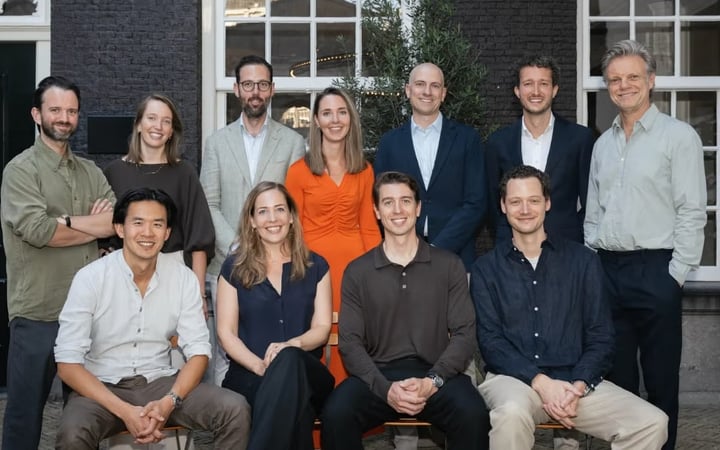
HULO.ai was founded in 2021 as a spin-off from Wetsus, the European centre of excellence for sustainable water technology in Leeuwarden. The founders are CEO Robbert Lodewijks, CTO Frank van der Hulst and co-founder Rudy Dijkstra. The technology was originally developed in collaboration with Dutch drinking water companies.
How the technology works
The HULO.ai platform analyses pressure and flow data that water utilities already collect through existing sensors in their pipe networks. Proprietary AI models are combined with physics-based models to detect, localise and prioritise anomalies in the network in real time.
A key practical advantage is that no new hardware is required and that water utilities do not need to divide their networks into so-called District Metered Areas (DMAs), a traditional but costly method of leak monitoring. According to the company, leaks can be flagged within a few minutes.
The platform is offered as Software-as-a-Service. Water utilities therefore pay for access to the software rather than for hardware installations or major infrastructure changes.
The scale of the problem
Worldwide, an estimated 30 percent of all treated drinking water is lost through leaks in distribution networks before it reaches the end user. This loss has both economic and environmental consequences: it costs drinking water companies money and increases pressure on freshwater sources.
HULO.ai states that its technology could save the equivalent of more than four million Olympic swimming pools' worth of water per year by 2030. The company does not specify the assumptions underlying this projection, but the scale illustrates the market potential it has in mind.
Latin America as the first expansion market
With the new funding, HULO.ai is focusing specifically on Latin America as its first step outside Europe. The company did not name specific countries or partnerships, but the choice is consistent with the international ambition explicitly stated at the time of the seed round.
Besides geographic expansion, part of the funds will go towards further development of the platform, with a focus on AI capabilities, network analysis and cybersecurity. The last addition is relevant: water distribution infrastructure is increasingly regarded as critical infrastructure, for which digital security is a requirement.
The participation of the Netherlands Enabling Water Technology Fund (NEW-ttt) and the Fries Development Fund confirms that public money also took part in the round, which is common for deep tech in the water sector, where commercial payback periods are longer than for consumer software.
Position in the Dutch water technology landscape
HULO.ai operates from Leeuwarden, which, with Wetsus as its anchor, has a recognisable ecosystem for water technology. Wetsus attracts both researchers and companies working on drinking water, wastewater and industrial water applications. Several spin-offs from this environment have attracted funding and won international customers in recent years.
For investors and founders elsewhere in the Dutch tech landscape, the composition of this round is illustrative: a combination of regional development capital (FOM), sector-specific public money (NEW-ttt), a strategic bank (Rabobank) and private venture funds (VP Capital, LUMO Labs, Vanagon). Layered financing of this kind is increasingly the pattern for deep tech with a clear societal application, particularly in sectors where government also plays a role as a potential customer or regulator.
Correction 15 October 2026: an earlier version of this article presented this news as recent. It was announced on 21 October 2025.