Invisix: the €20M ASML spin-out aiming to solve the 3D-chip inspection problem
·5 min read
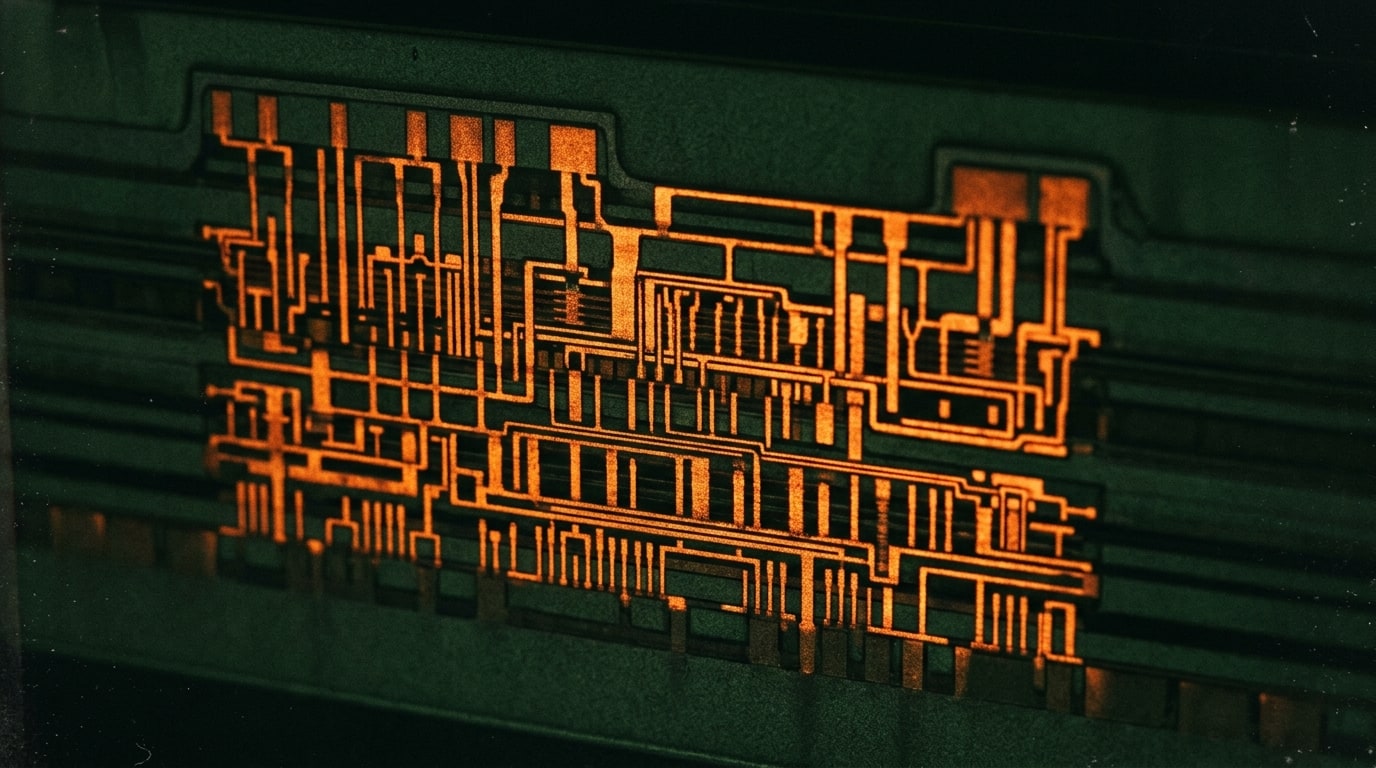
A modern AI chip is no longer a flat sheet of silicon. It is a city of tiny skyscrapers, stacked at the nanometre scale. Determining whether those towers are properly aligned is a growing challenge: conventional light simply cannot penetrate them. Chipmakers have therefore sometimes literally sawn wafers open to find out what was going wrong inside. Slow, costly and irreversible.
That is the gap Invisix is stepping into. The Eindhoven-based company, spun out of ASML in 2025, closed an oversubscribed seed round of €20 million on 1 June 2026. Dealroom describes that figure as unusually large for a first round. Yet the "seed" label says little here. This company is not starting from zero.
"Semiconductor manufacturers can't build what they can't see. As chips become more 3D, the industry needs a new generation of metrology tools that can look inside these incredibly complex miniature skyscrapers without destroying them."
Christina Porter, co-founder and CEO of Invisix
Ten years incubating in Veldhoven
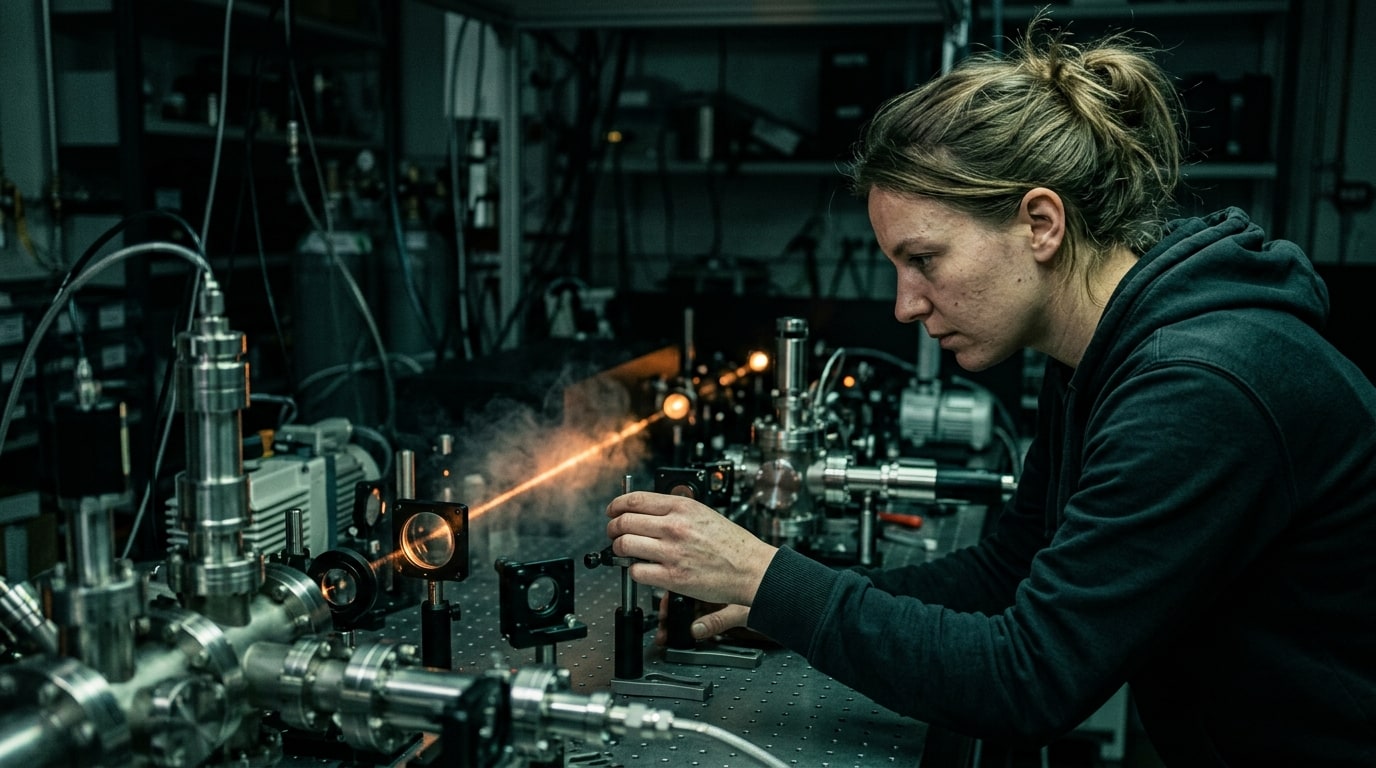
Invisix measures using soft X-ray radiation. The technique is called high harmonic generation: a laser firing ultrashort pulses strikes noble gas atoms, which in turn emit X-ray light with wavelengths between 0.1 and 10 nanometres. Algorithms and machine learning translate the scattered signal into a three-dimensional image of the structures inside the chip, without damaging the wafer. According to Techzine, the system measures more than four times as many parameters simultaneously as conventional optical methods.
The underlying physics earned Anne L'Huillier of Lund University a share of the 2023 Nobel Prize in Physics. Invisix collaborates with her.
The competitive moat, however, does not rest on that Nobel Prize alone. It lies in what happened afterwards. The soft X-ray programme ran inside ASML for over ten years. Invisix licences a substantial technology package from that work and brought along the people who built it. In 2023, the team already presented measurements on gate-all-around transistors, together with Intel and imec. That is the architecture the industry is transitioning to at around the 2-nanometre node. Porter herself describes that history as a degree of technical de-risking that is unusual for a hardware company at the seed stage.
Why ASML is not commercialising this itself is not addressed in the sources. A plausible reading: metrology and inspection equipment is a different discipline from lithography, with different customers and different competitors. But that remains an interpretation.
The physicists and the factory operator
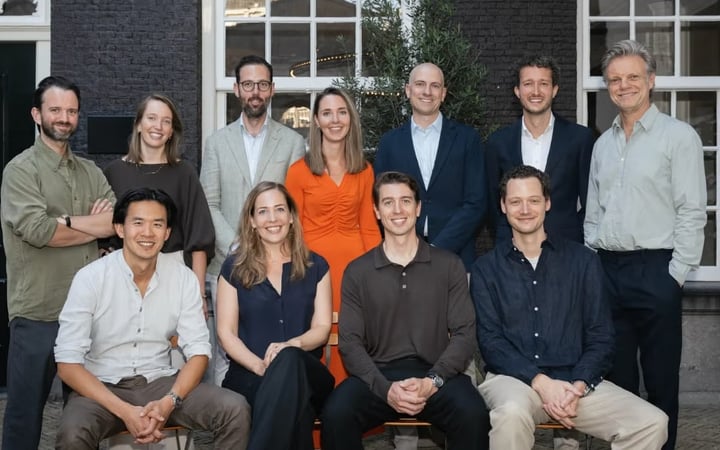
Porter holds a PhD from the University of Colorado Boulder and led ASML's research into soft X-ray metrology. Co-founder and CTO Sietse van der Post is likewise a PhD physicist and ASML alumnus.
The most telling name, however, appears in third position. COO Roald Dogge previously served as COO of NTS, a large Dutch contract manufacturer for the semiconductor industry. That appointment signals where the real risk lies. Getting a metrology setup to work in a laboratory is one thing. Delivering a machine that runs around the clock on a customer's production floor is an entirely different discipline. Invisix recently relocated its 300mm wafer test bench to a new cleanroom in Eindhoven and is now working on its first deliverable system.
Who is at the table, and who is not
Hitachi Ventures Corporate venture fund of Hitachi
Transition Ventures Venture capital fund based in London
imec.xpand Fund affiliated with Belgian research institute imec
Doosan Investment Co. Investment arm of Doosan
Tier-1 chipmaker Name not disclosed
Who led the round is not entirely clear. The press release names no lead investor; Dealroom points to Transition Ventures and Hitachi Ventures, while IO+ names Hitachi Ventures, imec.xpand and imec.
Two things stand out. First: one of the investors is a major chipmaker, and therefore a potential customer. IO+ reports that Samsung has expressed interest for its future 2-nanometre chips, though it has not been confirmed that Samsung is the anonymous investor. Having a customer at the shareholder table gives a seed-stage company something money cannot buy: access to a production line to prove the technology works.
Second: there is not a single Dutch fund in the list. The technology is Dutch, the team is based in Eindhoven, but the risk capital comes from Japan, London, Belgium and South Korea.
Twenty million against ten billion
Invisix is entering a market with established giants. KLA, the largest player in process control, recorded $10.9 billion in revenue from that segment alone in fiscal year 2025. Invisix has €20 million and no deliverable product yet.
That disproportion need not be fatal. Invisix is targeting a niche that existing optical tools do not serve well: the buried 3D structures of the latest chip generations. Hitachi Ventures investor Wolfgang Seibold sees this as the bottleneck for the entire sector:
"As semiconductor architectures grow more three-dimensional, metrology increasingly limits semiconductor yield and ramp speed, with each new node generation intensifying the challenge."
Wolfgang Seibold, Partner & Chief Investment Officer at Hitachi Ventures
But a fab does not quickly adopt a new type of machine. Every tool on the line must prove itself on speed, reliability and integration. High harmonic generation has proved itself in the laboratory; in a high-volume production environment it has not yet done so, as far as is publicly known.
The core question for Invisix is therefore not whether the physics holds. That has a Nobel Prize and ten years at ASML behind it. The question is whether the first deliverable system convinces a real fab before the money runs out. And for the Netherlands, a second question arises: if the next funding round again comes primarily from abroad, how much of this company will actually remain Dutch?
What does Invisix do and when was it spun out of ASML?
Invisix is an Eindhoven-based company that uses soft X-rays to measure the inside of 3D chips without damaging the wafer. It was spun out of ASML in 2025 and closed a 20 million euro seed round on 1 June 2026.
Which technique does Invisix use to look inside chips?
Invisix uses high harmonic generation, in which a laser with ultrashort pulses hits noble gas atoms that then emit X-ray light with wavelengths between 0.1 and 10 nanometres. Algorithms and machine learning translate the scattered signal into a three-dimensional image of the structures in the chip.
Who invested in Invisix's seed round and who led it?
The investors include Hitachi Ventures, Transition Ventures, imec.xpand, Doosan Investment and an unnamed Tier-1 chipmaker. Who led the round is not unambiguous: the press release names no lead, Dealroom points to Transition Ventures and Hitachi Ventures, and IO+ names Hitachi Ventures, imec.xpand and imec.
According to the article, what is the key question for Invisix?
The key question is not whether the physics is right, as it has a Nobel Prize and ten years of ASML behind it, but whether the first deliverable system convinces in a real fab before the money runs out. Invisix has 20 million euros and no deliverable product yet, while KLA booked 10.9 billion dollars in revenue in process control alone in fiscal year 2025.
Graduate Ventures has launched a second seed fund with a target size of €125 million, of which €100 million has already been committed. The fund focuses exclusively on founders from Dutch universities in AI, deep tech, healthcare and climate.
Meta's Superintelligence Lab launched Muse Wonder and Muse Wonder Full, the company's first frontier models, on 12 October 2026. Access via the Meta Model API costs $4 per million input tokens and $20 per million output tokens, the same rate as Claude Opus 5.5.
Delft-based deeptech company Perciv AI closed a €2.5 million seed round in December 2024, led by Day One Capital Ventures and Keen Venture Partners, with participation from Vinci Venture Capital. The company develops radar-based perception software for autonomous systems in automotive, robotics and aviation.