French AI lab Mistral AI completed a €3 billion Series D round on 8 September 2026, bringing its post-money valuation to more than €21 billion (approximately $24 billion). It is the largest equity financing round ever closed by a private European technology company. Mistral was founded in April 2023 by Arthur Mensch, Guillaume Lample and Timothée Lacroix, who previously worked at Google DeepMind and Meta Platforms respectively.
With this round, the total funding the company has raised in three years amounts to $7.5 billion, including earlier rounds and $830 million in debt financing earlier in 2026 for the purchase of Nvidia chips. Mistral expects to reach more than $1 billion in annual recurring revenue by the end of 2026 and now employs more than one thousand people.
Samsung leads a broad coalition of investors
Samsung Electronics is investing approximately €1 billion in the round, making it the largest new investor. The Scaleup Europe Fund, an EU initiative of approximately €5 billion managed by EQT, and existing investor PSG Equity are co-leading the round. New participants also include Advent, funds managed by BlackRock and the Grand Duchy of Luxembourg.
A long list of existing shareholders also participated, including a16z, ASML, Belfius, BNP Paribas CIB, Bpifrance, Carmignac, DST Global, Eurazeo, General Catalyst, Headline, Hillspire, Index Ventures, Korelya Capital, Lightspeed, Nvidia and Salesforce Ventures. As a result of the Series D, ASML, Samsung and Nvidia are now all shareholders in Mistral.
The three founders together hold approximately 39% of the economic equity and retain more than 50% of voting rights through a dual-class share structure, keeping control over the company's direction with them.
Proprietary data centres and growing infrastructure
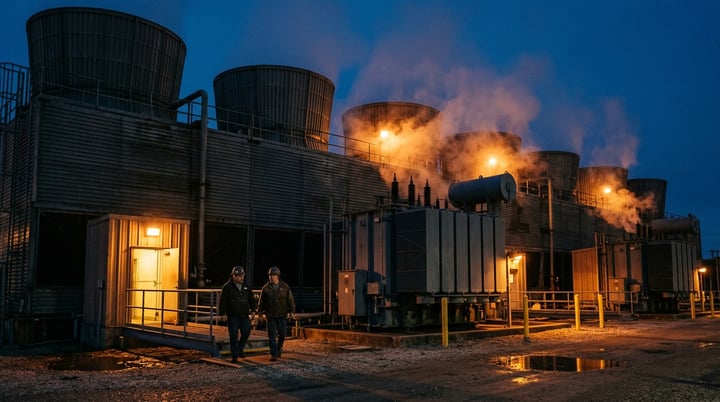
Part of the earlier funding has already gone towards physical infrastructure. In Bruyères-le-Châtel, south of Paris, a data centre is operational with 13,800 Nvidia Grace Blackwell GB300 GPUs and a capacity of 44 megawatts. A second site in nearby Les Ulis will add a further 10 megawatts in the second half of 2026. Mistral's entire infrastructure runs on Nvidia silicon.
The company plans to grow its proprietary computing capacity by approximately 100% over five years. This aligns with its ambition to be less dependent on external cloud providers, although Mistral also works with Microsoft for AI infrastructure in Europe under a multi-billion-dollar agreement from July 2026.
Models, products and customers
Mistral's largest public model is Mistral Large 3, released in December 2025. It is a mixture-of-experts model with 675 billion parameters, of which 41 billion are active during inference. The company's chatbot, originally called Le Chat and launched in February 2024, was rebranded in 2026 as Mistral Vibe.
Mistral operates in 20 countries and claims to support more than 125 large enterprises in AI applications. Among the named customers are Airbus, ASML, HSBC and BMW. In February 2026, a strategic partnership was formed with Accenture for large-scale AI deployment, and in March 2026 a partnership with Nvidia followed focused on the development of open frontier models.
The company also made two acquisitions in 2026: Paris-based AI startup Koyeb in February and Austrian company Emmi AI in May.
Governments as customer and shareholder
A notable element in the Series D is the involvement of the Grand Duchy of Luxembourg as a direct investor. At the same time, Mistral has signed contracts with the French military and the Luxembourg armed forces, and is exploring applications of its technology in Ivory Coast. The Scaleup Europe Fund, financed by the EU, completes the picture of a company that is deliberately positioning itself around the theme of sovereign AI, whereby governments seek to retain their own control over AI models and infrastructure.
For the broader European AI scene, the round illustrates that institutional and government investors are willing to contribute substantial funding when the narrative of technological autonomy aligns with political priorities. Whether that model also works for smaller European AI labs depends on their ability to build a comparable combination of commercial traction and geopolitical relevance. For Dutch and other European founders and investors, the Mistral round shows that the scale of capital now becoming available to European AI companies is shifting structurally.