The Netherlands is getting a new innovation agency: the National Agency for Disruptive Innovation, known as NADI. Minister Heleen Herbert of Economic Affairs announced its establishment on Budget Day, 15 September 2026. The agency is intended to bring together researchers, companies and end-users to develop solutions to concrete societal and technological challenges.
The government is allocating €260 million to NADI over the next five years. For 2027, €10 million is available, rising to €25 million in 2028, with a structural allocation of €75 million per year from 2029 onwards. The coalition agreement also provides for a capital injection of €500 million. Initiators had originally counted on at least €300 million in start-up capital with annual government contributions of €150 million over five years, and the total budget could potentially reach €1 billion, but no firm agreements on that have been reached yet.
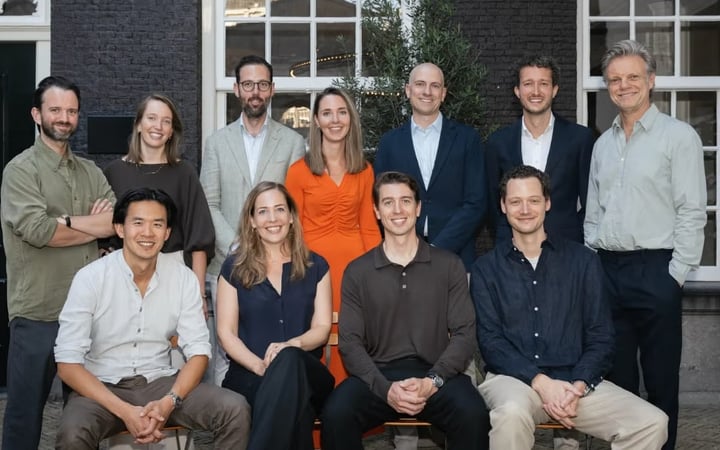
Jelle Prins will build and lead NADI. Beau-Anne Chilla, a deeptech investor, is involved as co-founder in setting up the organisation. Both previously served on the NADI expert panel of the Ministry of Economic Affairs.
NADI's place in the innovation landscape
NADI is neither a subsidy instrument nor an investment fund, but an operational organisation that designs and manages problem-driven innovation programmes. The agency operates in the space between the fundamental research funded by NWO and the market phase where Invest-NL and regional development companies step in. NADI aims to fill that gap, often referred to as the 'valley of death' for promising technology, with time-limited, clearly defined programmes.
Each programme typically runs for three to five years with a budget of between €20 million and €100 million, depending on scale and theme. Budgets per pilot are between €30 million and €50 million. Because the total budget in 2027 amounts to €10 million, the first pilots will be launched in phases.
The government can act as a 'launching customer' in NADI programmes, meaning it becomes an early adopter of new technology to accelerate real-world application. This principle is borrowed from the American ARPA model, which also underpins Germany's SPRIND (established in 2019) and the UK's ARIA (2022). NADI explicitly aligns itself with these examples.
Concrete themes and first programmes
NADI focuses on three domains: digitalisation and AI, security and resilience, and life sciences and biotech. The first pilot programmes will start in 2027; the full operational launch is planned for 2028.
The challenges NADI aims to address are formulated in concrete terms. Examples cited in the plans include removing PFAS from surface water, securing undersea cables in the North Sea, and mapping which technologies are needed to reduce strategic dependencies on other countries. Programme budgets are clearly defined and timelines are fixed, making it clear when results are expected.
In June 2026, investors, researchers, knowledge institutions and companies jointly called for the establishment of NADI in an open letter to the House of Representatives. Among the signatories were Philips and NXP. A letter from minister Karremans to parliament in February 2026 had previously confirmed the added value of such an agency. NADI is also part of Karremans' so-called 3% action plan, which contains nine measures to increase Dutch R&D spending.
The Netherlands invests less in research than its neighbours
The establishment of NADI is partly driven by a gap in R&D spending. The Netherlands currently allocates 2.2 per cent of gross domestic product to research and development. Germany stands at 3.1 per cent, Belgium at 3.3 per cent and Sweden at 3.6 per cent. The European target is 3 per cent. NADI is one of the instruments with which the government aims to close that gap.
Over the next two years it will become clear how NADI will work in practice alongside NWO, Invest-NL and regional development companies. The organisational form is independent, meaning NADI operates at arm's length from ministries. How that independence relates to its public funding and the government's political priorities is a question the first programme rounds will need to answer.
For other European countries that have established similar agencies, experience shows that it takes several years for an ARPA-style model to find its footing. SPRIND and ARIA are both still relatively young. The Netherlands can learn from their early experiences, but with NADI it is also writing its own version of a model that plays out differently in each country, depending on the existing innovation ecosystem. For Dutch founders and investors in deeptech, the arrival of NADI represents a new public point of contact for challenges that are too large for venture capital alone and too application-oriented for academic research.