Delft-based company predictIT analyses requirements and specifications for construction and infrastructure projects using the platform EisWise. The tool identifies where requirements are ambiguous, insufficiently verifiable, contradictory or poorly substantiated, and explains per finding why the issue exists and how it can be improved. The company, founded in 2009, addresses a persistent problem in large projects: requirements that appear clear on paper but give rise to disputes during execution or supervision.
predictIT positions itself in the construction and infrastructure category and combines two activities: deploying EisWise for what it calls 'Requirement Assurance', and seconding staff who bridge the gap between technical expertise and new ways of working within projects. Client figures, reference projects and financing details are not publicly available.
What EisWise does with a set of requirements
The approach is straightforward: the client submits a set of requirements, predictIT reviews them using EisWise and discusses the findings. The platform systematically checks whether requirements meet quality criteria such as unambiguity, verifiability and consistency. Requirements that are open to multiple interpretations, requirements that contradict one another, or requirements that lack any grounding are flagged in the process.
For each finding, the system explains why the requirement is problematic and what a concrete improvement would look like. This is relevant for projects in which multiple parties, such as a client, contractor and supervisor, must work from the same specification. Requirements that carry the same meaning for all parties prevent contractors and supervisors from having to debate later about what was actually intended.
The founding date of 2009 and the Delft location are taken from the company's own website; we were unable to verify these against external sources.
The team behind the tool
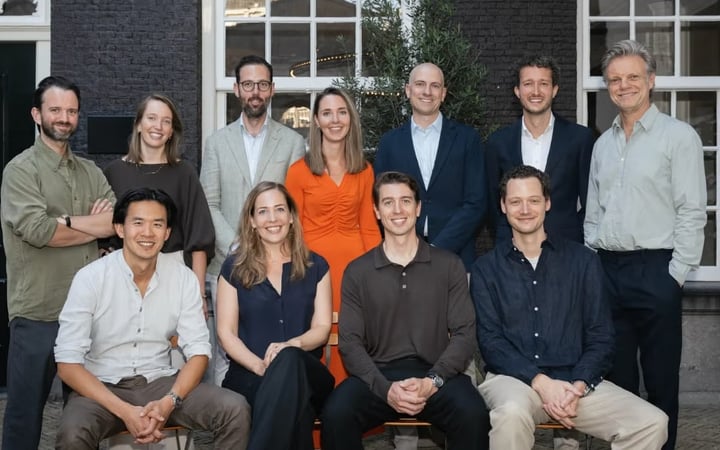
Behind predictIT is a team of systems engineers, project managers and AI architects. They have themselves drawn up and reviewed requirements in domains such as high-voltage power, water management and infrastructure; this forms the basis for the analysis EisWise carries out. That sectoral background gives the company a substantive edge over parties offering requirements tools without domain expertise.
predictIT does not disclose which profiles it employs or how many people it has. Little information about individual founders or executives is available through public sources either.
Secondment as a second pillar
Alongside EisWise, predictIT seconds staff to construction and infrastructure projects. These are professionals who can connect knowledge of systems engineering and new working methods to project practice. Whether predictIT regards the tool and the secondment activities as equally important is something the company does not state. It is conceivable that the two activities reinforce each other: secondment provides access to projects, while the tool offers a concrete service that can be deployed within those projects.
The combination of software and people is not unusual in the infrastructure sector. Large projects require both technical capacity and process guidance, and many providers of specialist tools combine these with consultancy or secondment in order to gain a genuine foothold with clients.
Context in the Dutch construction and infrastructure sector
Requirements management is a recognised bottleneck in the Dutch infrastructure sector. In large projects, such as those in water management, energy infrastructure or mobility networks, unclear or contradictory requirements regularly lead to cost overruns and delays. Rijkswaterstaat, ProRail and drinking water companies have been working for years to improve specification processes, partly through system-oriented contract forms in which the client's requirements form the core of the contract.
predictIT targets that moment in the process, before or early in the execution phase, with an automated quality check on the requirements set itself. For founders and investors active in construction tech or govtech, the positioning is recognisable: a niche market with a clear pain point, domain knowledge as a barrier to entry, and government or semi-public organisations as the primary client group. How large that market proves to be for predictIT in practice, and whether the combination of tool and secondment turns out to be scalable, depends on information the company has not yet made public.