Rocsys Targets Robotaxi Fleets in Europe with M1 Charging Platform in April 2026
·This news dates from ·3 min read
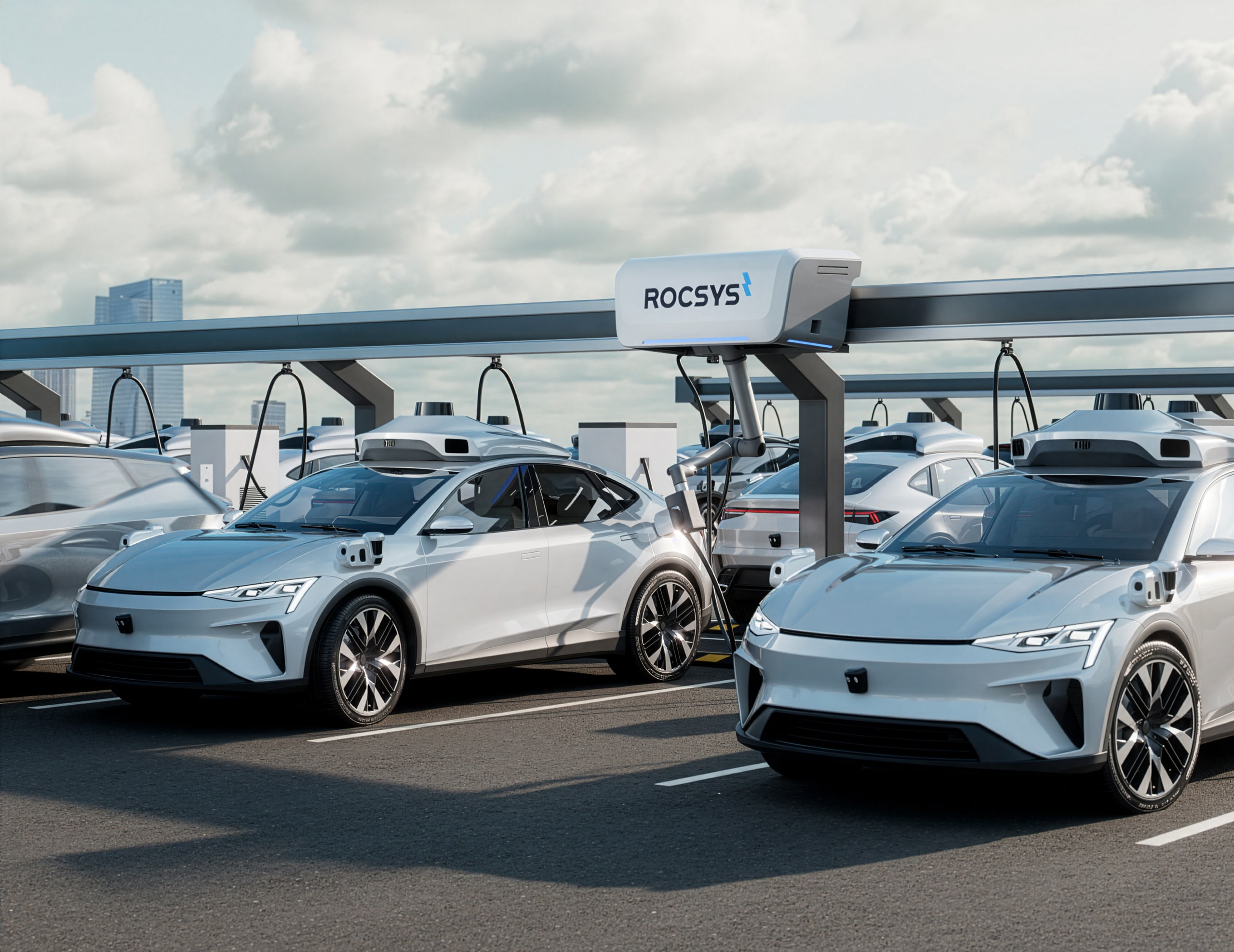
Rocsys, the Rijswijk-based company that makes hands-free charging solutions for electric vehicles, positioned its M1 platform for robotaxi depots in Europe in April 2026. On 19 September 2026, the company announced via LinkedIn that autonomous vehicle programs on the continent were accelerating and that several parties had concrete robotaxi rollout plans. The M1 is designed as an OEM-agnostic system that can handle a range of vehicles, chargers and connector types.
The platform was introduced at the end of April 2026, together with a 13 million dollar Series A extension led by Capricorn Partners. Scania Invest, Forward.One, SEB Greentech Venture Capital and Graduate Ventures also took part in the round. In total, Rocsys had raised 56 million dollars across four funding rounds up to that point.
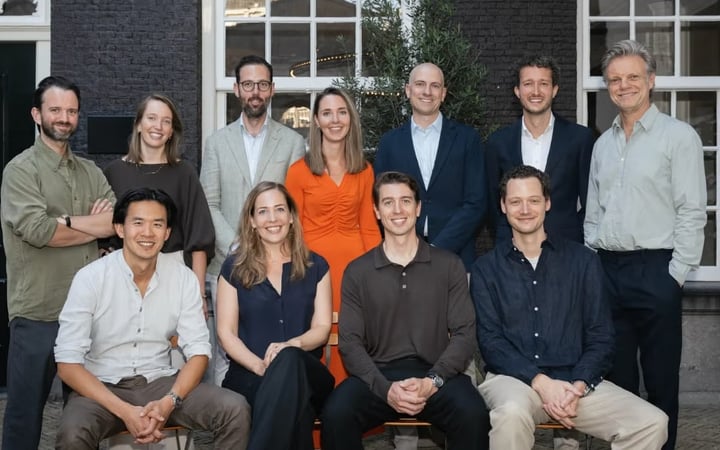
Rocsys was founded in 2019 by Crijn Bouman, Joost van der Weijde and Kanter van Deurzen. In addition to its headquarters in Rijswijk, the company has an office in Portland, Oregon.
What the M1 does and how the system works
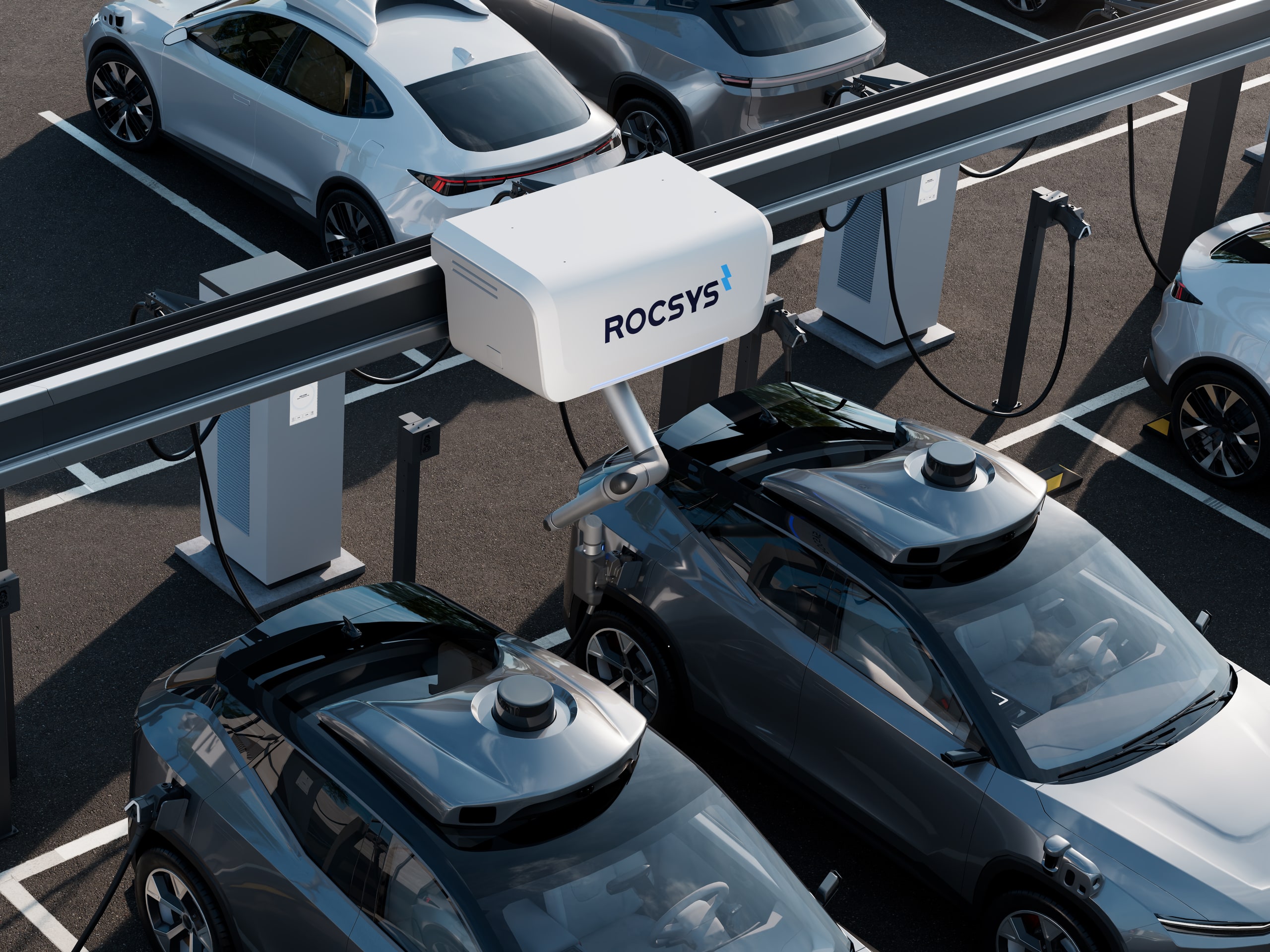
The M1 is a rail-mounted charging system with a robotic arm that has a wide reach and independently connects the charging cable to parked vehicles. Operators do not need to deploy staff for this. Because the system is compatible with multiple EV brands, charger types and connector types, depots with mixed fleets can use it without having to choose a single supplier.
Rocsys stated that the M1 successfully completes more than 99.9 percent of connection attempts in live environments. For a depot with fifty charging spaces, the system could improve operational efficiency by up to 75 percent and generate annual savings of up to 1.7 million dollars. The company based these figures on its own calculations; independent verification has not been disclosed.
The company protects its technology with an extensive patent portfolio: Rocsys held more than 130 granted patents and pending applications in its name.
Rollout and customers
At that time, the M1 was in a pilot phase. A large-scale rollout in North America and Europe was planned for 2027. Rocsys aimed to support thousands of charging spaces in both regions within five years of the announcement.
The company said it had closed a robotaxi deal but did not disclose the name of the operator. Earlier implementations included SSA Marine at the Port of Oakland, an environment with autonomous port vehicles that also require hands-free charging.
On the partnership side, Rocsys worked with, among others, Aidrivers, ICT Group and Unikie. The collaboration focused on integrating the charging system into broader fleet management software and autonomous logistics environments.
Why robotaxi depots present a specific challenge
In a robotaxi depot, vehicles in principle operate continuously and there is little room for charging stops in which a driver plugs in the cable. In that setup, manual charging becomes a bottleneck, both in terms of staffing costs and fleet availability. Rocsys explicitly focused its positioning on that tension between operational uptime and the physical act of connecting.
The choice for an OEM-agnostic system reflected the practice that robotaxi operators are generally not tied to a single vehicle manufacturer, or may not be in the future as the market matures. Charging infrastructure that is not locked to one brand lowers switching costs for operators.
European context and significance for the ecosystem
Rocsys's move toward European robotaxi fleets fits a broader trend: several parties were preparing commercial robotaxi services for the continent, although timelines varied by country and city due to differing regulations. The Netherlands was relatively advanced in regulatory terms, but large-scale commercial rollout there was also still a future prospect.
For other Dutch deeptech companies developing hardware for autonomous systems, Rocsys showed that early specialized positioning and a solid patent portfolio can help secure a place in the first international pilots. The combination of European development activities and a foothold in the North American market, via Portland, is a pattern that recurs among Dutch scale-ups seeking to win large fleet operators as customers.
Correction 15 October 2026: an earlier version of this article presented this news as recent. It was announced on 29 April 2026.
Graduate Ventures has launched a second seed fund with a target size of €125 million, of which €100 million has already been committed. The fund focuses exclusively on founders from Dutch universities in AI, deep tech, healthcare and climate.
Meta's Superintelligence Lab launched Muse Wonder and Muse Wonder Full, the company's first frontier models, on 12 October 2026. Access via the Meta Model API costs $4 per million input tokens and $20 per million output tokens, the same rate as Claude Opus 5.5.
Delft-based deeptech company Perciv AI closed a €2.5 million seed round in December 2024, led by Day One Capital Ventures and Keen Venture Partners, with participation from Vinci Venture Capital. The company develops radar-based perception software for autonomous systems in automotive, robotics and aviation.