Digital trust and AI infrastructure for all | Huawei
AI for Good4 September 2026Watch on YouTube
Part of series
Ep. 11 · Autonome Mobiliteit met AI
Namir Hourani verkent governance, veiligheid en publieke acceptatie van AI-aangedreven autonoom vervoer.
View the seriesWhat you'll learn
- Countries want AI sovereignty but not AI isolation; strategic autonomy and global cooperation require balance.
- Digital inclusion can come as much from market competition as from central regulation, as the American experience shows.
- More than half of internet traffic is now automated, turning identity and consent for agents into an open standards challenge.
- Only sixteen countries have large-scale computing infrastructures, while nearly two billion people remain offline.
- Agentic AI calls for safeguards that hold when AI takes over human decision making, not merely for technical accuracy.
Frequently asked questions
Why is there concern about the concentration of AI infrastructure?
What does agentic AI mean for the trust question?
What role does Cloudflare play in the agentic AI debate?
How does the European supervisor view the arrival of autonomous AI?
Topics
Read next
Sources
What is known about this topic outside the broadcast, and where it says so.
Description from the channel
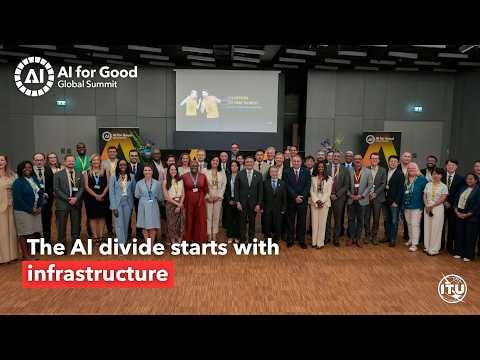
Will AI become a tool for shared prosperity or concentrated advantage? This high-level roundtable brings together senior decision-makers from industry, government and standards communities to explore two critical foundations of the AI era: digital trust in a world of autonomous systems and the infrastructure needed for inclusive AI development. Moderated by Bilel Jamoussi of ITU, with opening remarks from Seizo Onoe, the discussion examines identity, security, policy and investment choices shaping the future of AI. Recorded live at the AI for Good Global Summit 2026 at Palexpo in Geneva, Switzerland. _____________________________________________________________________ AI for Good is identifying innovative AI applications, building skills and standards, and advancing partnerships to solve global challenges. AI for Good is organized by ITU in partnership with over 50 UN partners and co-convened with the Government of Switzerland. Join the Neural Network! 👉https://aiforgood.itu.int/neural-network/ The AI for Good networking community platform powered by AI. Designed to help users build connections with innovators and experts, link innovative ideas with social impact opportunities, and bring the community together to solve global challenges using AI. 🔴 Watch the latest #AIforGood videos! https://www.youtube.com/c/AIforGood/videos 📩 Stay updated and join our weekly AI for Good newsletter: http://eepurl.com/gI2kJ5 🗞Check out the latest AI for Good news: https://aiforgood.itu.int/newsroom/ 📱Explore the AI for Good blog: https://aiforgood.itu.int/ai-for-good-blog/ 🌎 Connect on our social media: Website: https://aiforgood.itu.int/ X: https://twitter.com/AIforGood LinkedIn Page: https://www.linkedin.com/company/26511907 LinkedIn Group: https://www.linkedin.com/groups/8567748 Instagram: https://www.instagram.com/aiforgood Facebook: https://www.facebook.com/AIforGood Disclaimer: The views and opinions expressed are those of the panelists and do not reflect the official policy of the ITU.