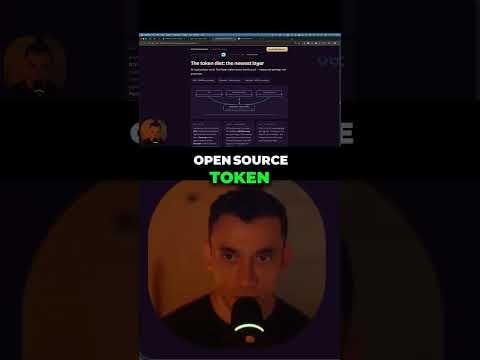
Slash your AI costs with these 3 token-saving secrets! 📉
Julian Goldie Agency15 July 2026Watch on YouTube
Part of series
Ep. 6 · AI-kosten Halveren
Praktische tokenoptimalisatietechnieken en modelkeuzes om AI-infrastructuurkosten drastisch te verlagen.
View the seriesWhat you'll learn
- Three open-source minimization models (RTK, Caveman, Ponytail) drastically reduce token consumption without sacrificing agent utility.
- A token diet approach removes unnecessary information and condenses output, significantly lowering operational costs of AI agents.
- Minimalist coding style and output condensation are practical strategies for scaling AI-agents while controlling expenses.
Frequently asked questions
Which three models are used for token-saving?
How does the token diet approach help with cost optimization?
Can these optimization methods scale without losing quality?
Topics
Read next
Writer voert nieuw AI-model in met lagere tokenkosten
Writer presenteert een kostenbesparing-gericht AI-model gebaseerd op Z.ai's open source GLM-5.2 voor schaalbare bedrijfsimplementatie.
Onderzoek: AI-agentteams kosten tot 5,1x meer zonder noemenswaardige kwaliteitswinst
Volgens Vals AI presteren teams van AI-agenten nauwelijks beter dan losse agenten, terwijl de tokencosten tot 5,1 keer hoger liggen; Anthropics eigen data laat zien dat de kwaliteit na tien agenten afvlakt.
OpenAI halveert prijzen met GPT-6 Sol en Luna, weinig prestatieverbetering
OpenAI brengt twee goedkopere modellen uit die prestaties van voorgangers leveren tegen de helft van de tokenprijs, terwijl onafhankelijke analyses weinig vooruitgang in intelligentie zien.
Vier AI-onderzoeksresultaten die modellen sneller, slimmer en zuiniger maken
Vier recente onderzoeksontwikkelingen laten zien hoe AI-modellen kleiner, sneller en beter in redeneren worden: van spaarzame activering en zelfcorrectie tijdens training tot energiezuinige inferentie en een geheugenframework voor AI-agenten.
Google-onderzoekers beperken overfitting bij zelflerende AI-agenten
Google-onderzoekers presenteren RRSI, een methode die voorkomt dat zelfverbeterende AI-agenten hun testtaken uit het hoofd leren en die scores op onbekende benchmarks tot 4,7 punten verhoogt met ongeveer 30 procent minder tokens.
OpenAI verlaagt API-prijzen voor GPT-5.6 Luna en Terra terwijl concurrentie aantrekt
OpenAI heeft per 30 juli 2026 de API-prijzen voor GPT-5.6 Luna met 80% verlaagd en voor GPT-5.6 Terra met 20%, als reactie op toenemende concurrentie van labs als Anthropic, Moonshot AI en Alibaba. Voor het vlaggenschipmodel Sol introduceerde het bedrijf een snellere modus tegen dubbele kosten.
Description from the channel
Running agents can get expensive fast. This system introduces a unique token diet approach, utilizing three distinct open-source minimization models: RTK, Caveman, and Ponytail. By stripping away unnecessary fluff, condensing output, and mimicking a minimalist coding style, these systems drastically reduce token consumption without sacrificing agent utility. It is an essential strategy for anyone scaling AI agents while keeping costs under control. #AI #ClaudeOS #AgentOS #TokenDiet #AITips