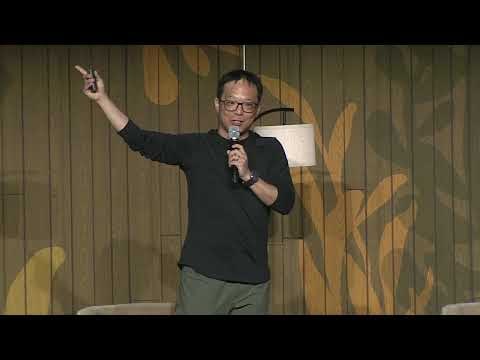
UB2026 | Steve Liang | Automating the Path to Near-Zero Methane Emissions with Agentic AI
Amii7 July 2026Watch on YouTube
Topics
Description from the channel
SESSION SUMMARY: Steve Liang, Professor and IoT Research Chair at the University of Calgary and founder of SensorUp, explores the deployment of continuous, autonomous AI agents to achieve net-zero methane emissions in the oil and gas sector. Liang introduces the spatial-temporal challenges of industrial emissions management through a fictional case study of an operator facing an immediate environmental crisis from public satellite detection. While modern operations are traditionally siloed across multiple disconnected SCADA dashboards, enterprise software (SAP/Maximo), and regulatory compliance matrices, SensorUp integrates heterogeneous global data streams—spanning satellites, aerial flyovers, and continuous ground sensors—into a unified system of systems. By mapping these workflows onto the strategic "AI Canvas" framework from Prediction Machines, Liang advocates for long-running, self-improving agents designed to automate complex facility repair schedules, lowering detection-to-mitigation timelines from days down to minutes. The second half of the presentation exposes the core technical vulnerabilities of relying on purely probabilistic Large Language Models (LLMs) within highly structured, regulated environmental workflows. Because LLMs natively struggle with ambiguous terminology, inconsistent spatial partitioning, and context-dependent unit conversions, Liang details a robust neuro-symbolic remediation strategy grounded in open-standard ontologies. By introducing specialized Discrete Global Grid Systems (DGGS) as spatial primitives and formal conceptual guardrails like EmissionML, the architecture restricts the model's reasoning capabilities to verifiable physical parameters. Liang showcases actionable agent-to-agent architectures, demonstrating how a specialized "GeoLlama" planning agent can replace expensive external consulting by automatically running multiple resource scenarios inside a high-fidelity geospatial digital twin environment. Concluding with a humorous look at his own automated personal workflows and a strong call to action for the broader deployment of digital twin simulation dojos, Liang provides a definitive blueprint for utilizing intelligent edge agents to drive scalable carbon reductions. ORIGINAL SESSION DESCRIPTION: GHG emissions reduction, such as methane emissions reduction, is no longer a data-collection challenge—it is an operational intelligence challenge. With sensing technologies rapidly proliferating across satellites, continuous monitors, OGI cameras, and field inspections, operators now face the harder problem: turning heterogeneous, high-velocity data streams into coordinated, verifiable action. In this talk, we present how agent-based AI, grounded in open standard ontologies such as OGC Emission Event Modeling Language, enables the next generation of measurement-informed operations. We introduce a system of specialized agents—sensor ETL agents, emission-event detection agents, quantification agents, mitigation planning agents, and workflow-orchestration agents—that collaborate over a shared spatio-temporal model. These agents transform raw observations into consistent emission events, streamline LDAR and repair workflows, and provide transparent, traceable, and reproducible inventories. By combining spatial/temporal indexing, standardized vocabularies, and agentic reasoning, the system helps operators reduce operational latency, prioritize the highest-impact repairs, and meet emerging regulatory and market expectations for Measurement-Informed Inventories. This session will illustrate real deployments with some of the world's largest energy operators, highlight lessons learned from building an AI-ready data foundation, and outline how agentic systems can accelerate the path toward near-zero methane emissions. SESSION DETAILS: Upper Bound 2026 | Day 1, Main Stage 1 ABOUT UPPER BOUND: Upper Bound 2026, powered by Amii, was our biggest, boldest event to date! Learn more about Upper Bound and get your pass for 2027: https://www.upperbound.ai/