Dutch AI in the World
Groningen will host a €200 million AI factory
Oct 28, 2025
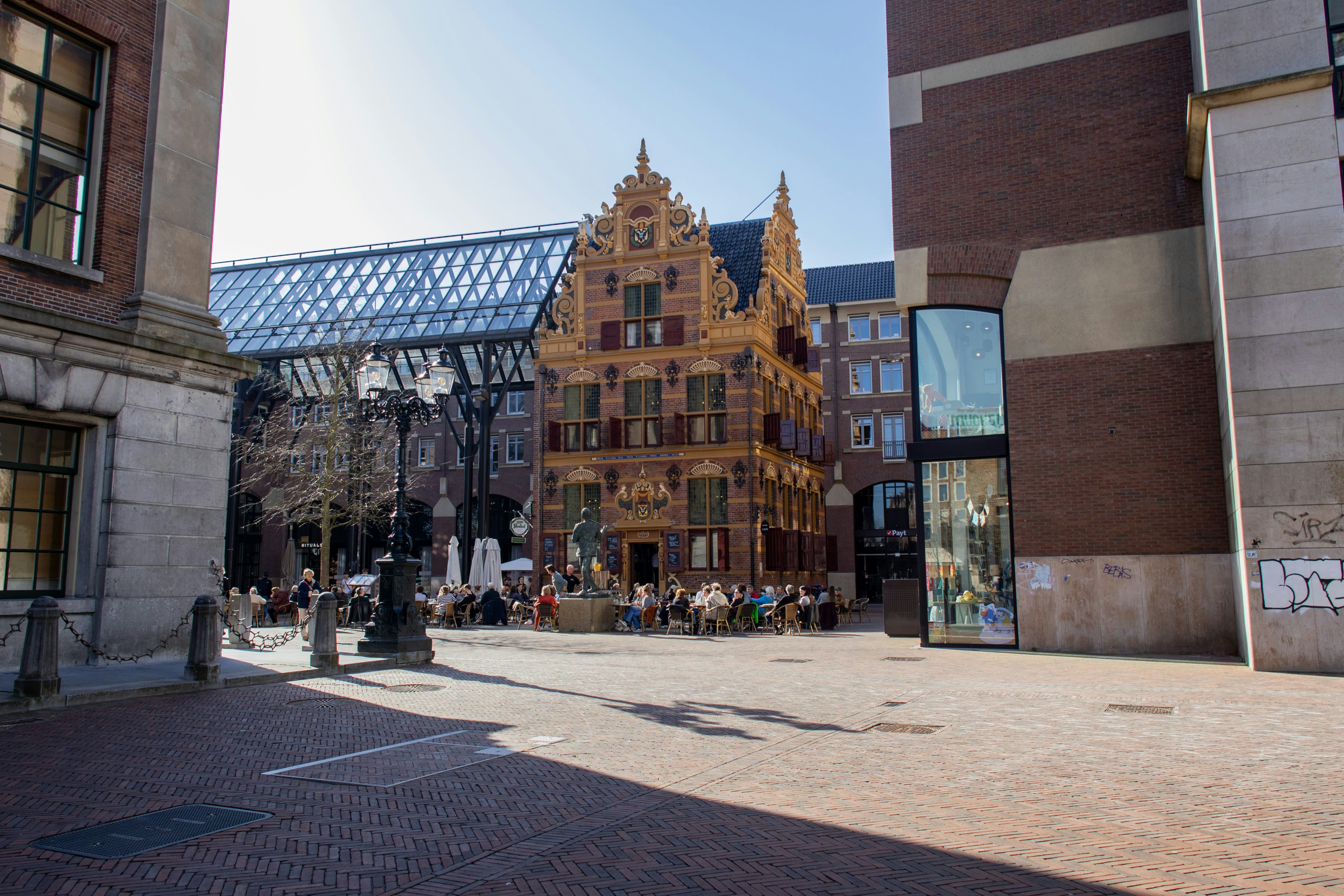
The Netherlands has secured its largest AI investment ever. With a total budget of €200 million, an AI Factory is coming to Groningen, one of the nineteen European hubs intended to lay the foundation for digital sovereignty. The facility, which will be fully operational in 2027, combines a supercomputer, expertise center, and data facility. For investors, startups, and scale-ups, this opens a strategic window: free access to computing power that is normally only available to tech giants, at a time when Europe is drastically ramping up its AI infrastructure.
A hub in a network of nineteen
The AI Factory in Groningen is not an isolated project. It is part of a European network of nineteen AI Factories and thirteen smaller antennas, collectively funded with €10 billion between 2021 and 2027 [1]. The Groningen hub was selected in October 2025, along with five other locations in the Czech Republic, Lithuania, Romania, Spain, and Poland [1]. These factories are strategically distributed across Europe, from LUMI in Finland to BSC in Barcelona, collectively forming the backbone of European AI development.
What sets these factories apart from commercial cloud infrastructure is their public mission. They offer free access to AI computing power for European startups, SMEs, researchers, and governments, with priority for AI startups and small businesses [1]. The compute time is allocated through open call procedures: fifty percent through European EuroHPC calls, fifty percent for Dutch projects [2]. This is a fundamentally different approach from the pay-per-use models of Amazon, Google, or Microsoft.
AI Factory Component | Function | Target Group |
|---|---|---|
AI supercomputer | Computing power for training AI models | Startups, SMEs, researchers |
Expertise center (TNO) | Support in model development | Companies without AI expertise |
Data facility | Access to datasets for training | Sectors such as healthcare, logistics |
The Netherlands' infrastructure advantage
The choice of the Netherlands as a location for an AI Factory is no coincidence. The country boasts unique infrastructure that provides the factory with a strategic advantage. AMS-IX, the Amsterdam Internet Exchange, is one of the largest internet exchanges in the world with peak traffic of 14 terabits per second in 2024 [3]. With more than eight hundred connected locations worldwide, the Netherlands naturally serves as a hub for data traffic in Europe [3]. This connectivity is crucial for AI infrastructure, where large data flows between data centers, users, and cloud providers are the norm.
Groningen itself brings specific strengths. The University of the North, a collaboration between the University of Groningen, UMCG, and other northern knowledge institutions, provides a strong academic foundation [4]. UMCG hosts the Lifelines project, one of the largest biobanks in the world, enabling direct applications in preventive healthcare. TNO, which will lead the expertise center, has experience building GPT-NL, the first Dutch large language model developed entirely from scratch [2].
"With AI, we can use this data to gain insights into why someone develops a disease, and whether or how we might prevent it," said UMCG dean Wiro Niessen [4].
Where are the opportunities?
The AI Factory opens up concrete opportunities for different players. For startups developing AI models, free access to supercomputing means a drastic reduction in development costs. Training a medium-sized AI model can quickly cost hundreds of thousands of euros in cloud computing power. For scale-ups seeking a European alternative to American cloud providers, the factory offers a compliance-friendly option that meets European data regulations.
Sectors with data-intensive processes can directly benefit. Healthcare can train AI models for preventive care through UMCG and Lifelines. Logistics, a strong sector in the Netherlands with the port of Rotterdam, can develop optimization models. Manufacturing can test industrial AI applications. The factory focuses explicitly on sectors such as healthcare, mobility, security, climate, and finance [2].
The timing is strategic. The expertise center starts in 2026, the supercomputer reaches full capacity in 2027 [2]. This creates a window for early adopters to build partnerships with TNO, RUG, and UMCG before the infrastructure is fully occupied. Companies that invest now in developing AI capabilities can grow with the infrastructure.
The next step: gigafactories
The AI Factories are just the beginning. Europe plans five AI Gigafactories with funding of €20 billion via the InvestAI Facility [1]. These gigafactories will be twenty times larger than the current factories, with more than a hundred thousand AI processors, and are intended for training next-generation AI models with trillions of parameters [1]. The Netherlands has shown interest in hosting a gigafactory, which would further strengthen its position as an AI hub.
The question is whether the Netherlands can capitalize on this opportunity. The AI Factory in Groningen lays the foundation, but the real test comes in 2027 when the infrastructure is operational. Will Dutch startups and companies make extensive use of the free computing power? Can we build an ecosystem that competes with clusters in Barcelona, Helsinki, or Bologna? The infrastructure is there. Now it is up to investors, entrepreneurs, and policymakers to make it a success story.
Max Pinas
Founder Dutchstartup.ai & studio hyra
References
[1] European Commission (2025). AI Factories - Shaping Europe's digital future. https://digital-strategy.ec.europa.eu/en/policies/ai-factories
[2] TNO (2025). TNO contributes expertise to Netherlands' first AI Factory. https://www.tno.nl/en/digital/artificial-intelligence/future-proof-ai-systems/ai-factory/
[3] AMS-IX (2025). AMS-IX: worldwide internet milestones in 2024. https://www.ams-ix.net/ams/news/ams-ix-worldwide-internet-milestones-in-2024
[4] University of Groningen (2025). It is official: AI Factory to be established in Groningen. https://www.rug.nl/about-ug/latest-news/news/archief2025/nieuwsberichten/1010-ai-fabriek?lang=en
Read More

Join
DutchStartup.AI
Secure your place in the Dutch AI ecosystem now

Founding Partner

Powered by

Join
DutchStartup.AI
Secure your place in the Dutch AI ecosystem now
Founding Partner
Powered by
Join
DutchStartup.AI
Secure your place in the Dutch AI ecosystem now
Founding Partner
Powered by
Dutch AI
Built Different
An initiative by Willem Blom & Max Pinas | Powered by Studio Hyra
Dutch AI. Built Different 2025
Dutch AI
Built Different
An initiative by Willem Blom & Max Pinas
Powered by Studio Hyra
Dutch AI. Built Different 2025
Dutch AI
Built Different
An initiative by Willem Blom & Max Pinas | Powered by Studio Hyra
Dutch AI. Built Different 2025