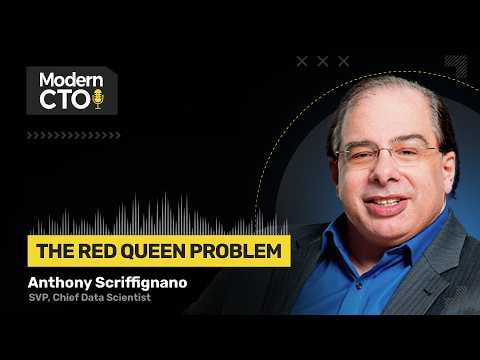
The Red Queen Problem with Anthony Scriffignano, PhD, Data Scientist
Modern CTO20 augustus 2026Bekijk op YouTube
Wat je leert
- Het 'Red Queen Problem' stelt tech-leiders voor de uitdaging om constant sneller te innoveren om relevant te blijven in AI-competitie
- LLM's zien veel minder van het internet dan veel mensen denken, wat hun daadwerkelijke capaciteiten beperkt en risico's op hallucination verhoogt
- Het grootste fout in enterprise AI is beginnen met de technologie in plaats van het probleem dat je wilt oplossen
- Data governance vereist aandacht voor vier essentiële elementen: privacy, permission, provenance, en mindset
- CTOs moeten voorzichtig zijn met AI-agenten die toegang krijgen tot gevoelige systemen zoals e-mail, vanwege veiligheids- en betrouwbaarheidsrisico's
Veelgestelde vragen
Wat is het 'Red Queen Problem' waar Anthony over spreekt?
Hoeveel van het internet kunnen LLM's eigenlijk zien?
Wat zijn de vier essentiële elementen van data governance?
Waarom raadt Anthony aan tegen het geven van AI-agenten toegang tot e-mail?
Onderwerpen
Lees ook
Beschrijving van het kanaal
Today, we're talking to Anthony Scriffignano, PhD, a longtime chief data scientist now working on hyperspectral space intelligence and global AI policy. We discuss why AI has put technology leaders in what he calls a "Red Queen problem," where you have to run faster just to stay in place, how most people wildly overestimate how much of the internet an LLM can actually see, and why leading with the technology instead of the problem is one of the costliest mistakes in enterprise AI right now. All of this right here, right now, on the Modern CTO Podcast! 00:00 – Cold Open: The Chair Keyboard Interface 00:37 – Catching Up: Life After Dun & Bradstreet 03:12 – New Jersey, DC, and The Sopranos 04:51 – Today’s Topic: What CTOs Get Wrong About AI 06:56 – The Red Queen Problem Explained 09:53 – Avoiding the Echo Chamber: Failing Smarter 12:31 – Different Kinds of Smart: The Salad Bar 14:07 – How Anthony Actually Uses LLMs Daily 17:01 – Why He Won’t Hand Agents His Email 19:10 – The Myth of AI Knowing Everything 20:37 – Veracity, Truth, and Hallucination 23:44 – Using AI for Blind Spot Detection 26:41 – Biggest Mistakes CTOs Are Making Now 28:34 – The Global AI Regulatory Patchwork 30:23 – Assume You’ve Already Been Infiltrated 32:32 – National Security vs. Privacy Worldwide 34:13 – US Federal vs. State Regulation Tangle 37:24 – The Four Ps of Data Governance 40:54 – Mindset: The Forgotten Fourth Lever 44:01 – Leading With “Help Me Understand” 46:43 – Startups, Hubris, and Vibe Coding 49:26 – QR Codes and the New Attack Surface 51:44 – Will Intelligence Get Locked Down? 53:34 – Star Trek vs. The Jetsons Future 55:32 – Technology, Free Time, and Human Choice 57:21 – Uneven Access and Lessons From COVID 1:00:04 – The Next Generation’s Undefined Path 1:00:47 – Parenting, Time, and Doing Better 1:03:34 – Kids Mimic Us, Not What We Teach 1:04:39 – The Vanishing Library and Future Research 1:06:31 – Spotting Disruption AI Can’t Predict 1:09:21 – Peer Reviewed With Johns Hopkins APL 1:10:58 – The Pentagon Pizza Tracker Example 1:12:19 – Why Missing Data Doesn’t Break the Model 1:13:52 – Closing Thoughts and Sign Off