Founders & Startups
Farmers can't find weeders but secure two million for AI with Odd.Bot
Jan 5, 2026
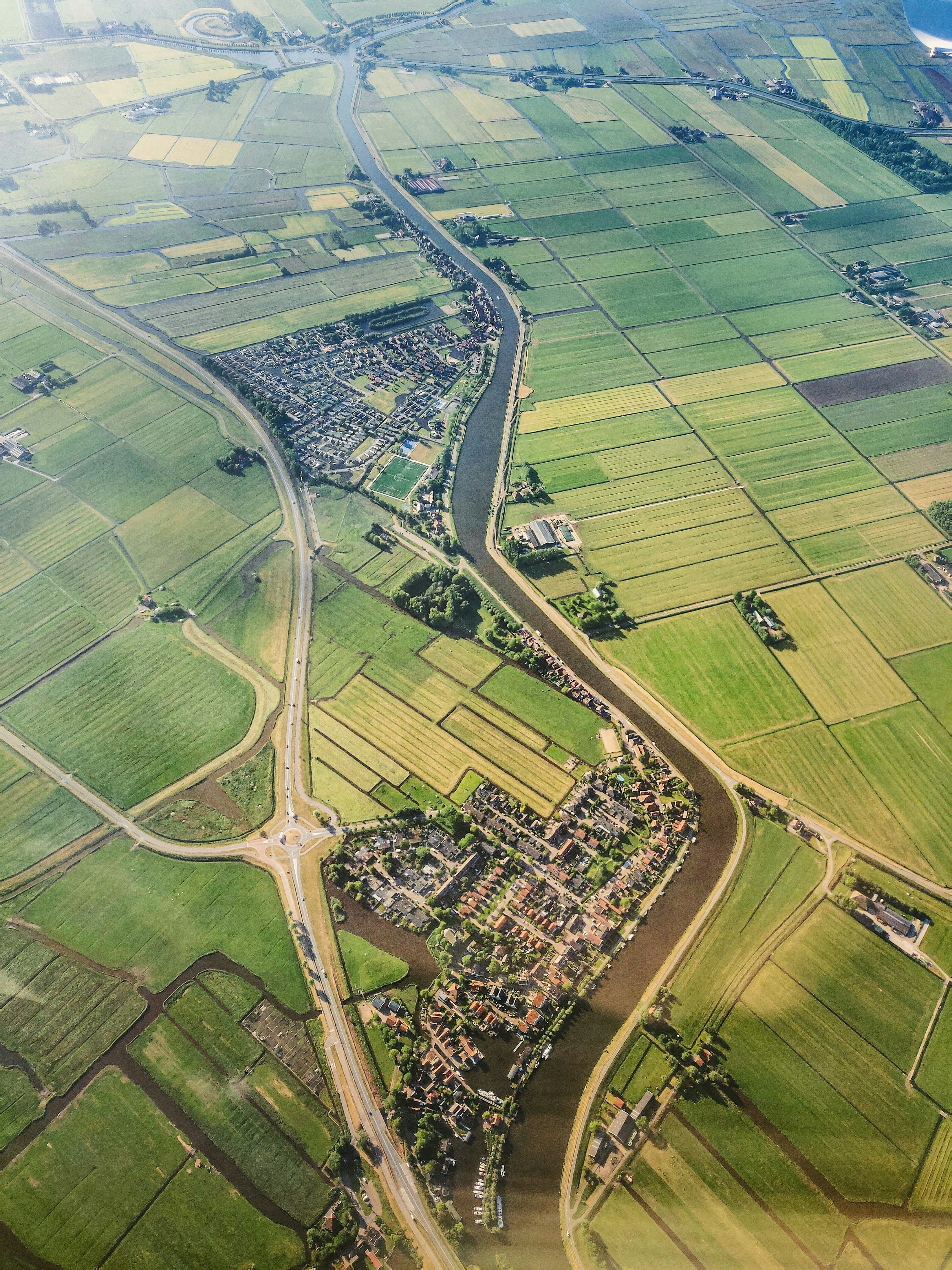
In a world where AI chatbots philosophize about the meaning of existence, Dutch agriculture still grapples with the same problem that has plagued farmers for millennia: weeds. It almost sounds absurd. The Netherlands is the second-largest agricultural exporter globally, a high-tech horticultural giant with billions in innovation. And yet, an organic farmer in Flevoland regularly finds himself on his knees among the carrots. Hand by hand, weed by weed.
That image is changing. On farms in Kraggenburg and Ens, a white machine rolls silently through the furrows. Day and night. No coffee breaks, no restroom breaks. The Maverick by Odd.Bot is not a spectacular robot from a science fiction film. It is a patient worker. One that pulls two million weeds from the ground with a precision of two millimeters in two weeks. [1]
From Delivery Bike to AI-Controlled Weeding Arm
Martijn Lukaart didn't start in agriculture. In 2015, he founded Bun.Run, a platform for local deliveries by bike. Urban logistics, last-mile delivery. The typical startup vocabulary of that time. But along the way, his focus shifted. He saw a more urgent problem.
The organic sector was growing but hit a wall. No herbicides, so manual weeding was necessary. Costs ranging from one to two thousand euros per hectare. And the people to do that work were becoming increasingly scarce. Seasonal workers from Eastern Europe were more frequently choosing jobs in their own countries, where wages were rising and unemployment was falling. [2]
In 2018, Lukaart, together with students from TU Delft and RoboHouse, started on a prototype. Can an AI system recognize every individual weed among thousands of crops? And can a robot remove that weed without damaging the adjacent root? The answer turned out to be yes, but the path to achieve this took years of training, iteration, and fieldwork.
Artificial Intelligence Among Carrots
The Maverick that drives across fields in the Netherlands, Belgium, and Germany today is the fourth generation. It navigates not with GPS but with computer vision. Cameras follow the crop rows, AI models analyze every plant in the image, distinguishing crop from weed. Two mechanical arms then pull only the invaders from the ground, roots and all.
The figures are impressive. The robot can work approximately one hectare per day. It removes up to two weeds per arm per second. And the system operates 24 hours a day, seven days a week. The only human interaction required is changing the batteries. [3]
"We cleaned this carrot field without pulling a single weed by hand. Only the robot went in. No coffee breaks, no restroom breaks, it just keeps going. Even at night." — Bert Benedictus, organic grower in Kraggenburg [1]
The price ranges from 90,000 to 120,000 euros, depending on the configuration. That sounds like a hefty investment. But do the math. Digni van den Dries, an organic grower in Ens, would have needed twelve people for the same work. And they simply are no longer available. [1]
"Two weeks of driving, two million weeds gone. I would have needed twelve people for that. And you can't find them anymore. This robot has saved me labor and given me peace." — Digni van den Dries, organic grower in Ens [1]
Scarcity as Strategy
This is where it gets interesting. The first production run of 2025, sixteen robots, was sold out before assembly even began. The pre-orders for 2026 are almost full. There is a clear demand. And yet Odd.Bot chooses not to accelerate.
It is a deliberate choice. Lukaart keeps production limited to ensure quality and service, together with local partners. [4] Those partners are crucial. Mechanization companies like Weevers BV in Swifterbant and Doorgrond in the north provide delivery and support. An AI-driven robot heading into the field without good service is an expensive paperweight. Odd.Bot builds trust first, then volume.
And there is something else remarkable. In the last funding round of two million euros, led by Iconic Ventures, regional farmers also invested. [4] Not anonymous venture capitalists, but farmers who see the robot working in the field every day. They are not just buying a product. They are betting on the future of their own sector.
A Lesson from Flevoland
Twenty Mavericks are now working across fields in four countries. They operate in carrots, onions, chicory, and red beet. The technology works. The question that remains is whether Odd.Bot can build capacity without losing the quality that is currently convincing farmers.
For other startups, there is a lesson in this story. Funding doesn't always have to come from Silicon Valley or traditional VCs. Sometimes your best investors are simply in your customer base. Farmers investing their own money in a weeding robot because they see it perform daily. That is validation that no pitch deck can match.
Willem Blom
Founder Dutchstartup.ai
References
[1] Odd.Bot (2025). Maverick Weeding Robot - Customer testimonials . https://www.odd.bot/maverick https://www.odd.bot/maverick
[2] Nieuwe Oogst (2020). Arbeid sturen met teeltkalender . https://www.nieuweoogst.nl/nieuws/2020/03/05/arbeid-sturen-met-teeltkalender https://www.nieuweoogst.nl/nieuws/2020/03/05/arbeid-sturen-met-teeltkalender
[3] Odd.Bot (2025). The Maverick in 2025: Here's What You Need to Know . https://www.odd.bot/blog/the-maverick-in-2025 https://www.odd.bot/blog/the-maverick-in-2025
[4] Silicon Canals (2024). Dutch-based Odd.Bot lands €2M to boost weeding using robots . https://siliconcanals.com/odd-bot-lands-e2m/ https://siliconcanals.com/odd-bot-lands-e2m/
Read More


Join
DutchStartup.AI
Secure your place in the Dutch AI ecosystem now
Founding Partner

Powered by

Join
DutchStartup.AI
Secure your place in the Dutch AI ecosystem now
Founding Partner
Powered by
Join
DutchStartup.AI
Secure your place in the Dutch AI ecosystem now
Founding Partner
Powered by
Dutch AI
Built Different
An initiative by Willem Blom & Max Pinas | Powered by Studio Hyra
Dutch AI. Built Different 2025
Dutch AI
Built Different
An initiative by Willem Blom & Max Pinas
Powered by Studio Hyra
Dutch AI. Built Different 2025
Dutch AI
Built Different
An initiative by Willem Blom & Max Pinas | Powered by Studio Hyra
Dutch AI. Built Different 2025