Founders & Startups
Thirty hours spent investigating a single incident
Feb 6, 2026

Three staff members at an American care facility spent more than thirty hours scrolling through camera footage. They were looking for one specific moment. By the time they found it, it was far too late to intervene.
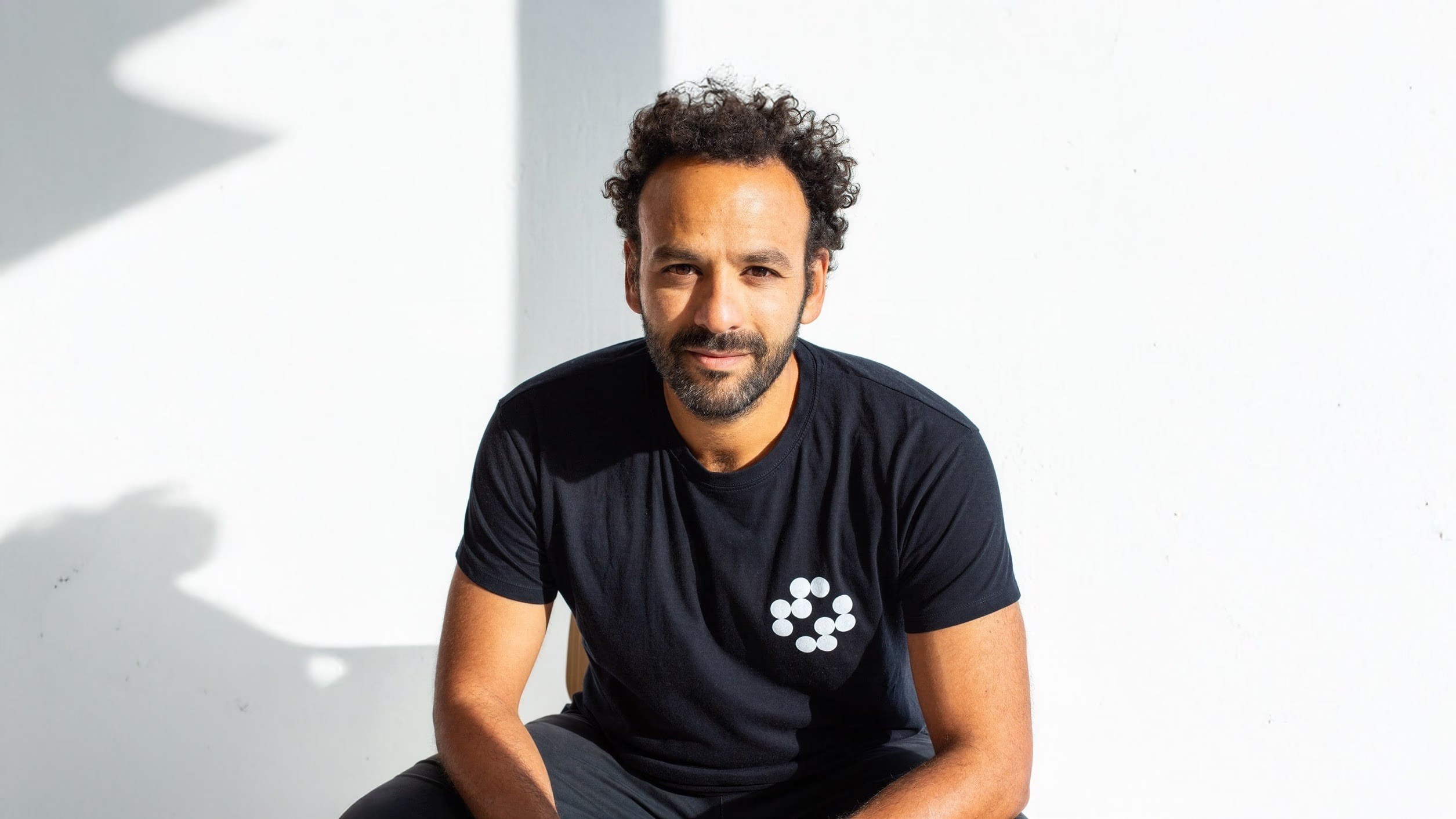
Thomas Alflen, co-founder of Oddity.ai, heard this story and recognized the problem immediately. His Utrecht-based startup had spent years developing violence detection for Dutch municipalities and prisons. The question was whether that same technology would work in the American healthcare sector, where privacy regulations are stricter and trust in technology vendors is scarce.
The answer turned out to lie not just in technology. It was in showing up: walking sites, listening to staff, and tailoring the AI to each environment.
From tracking influencers to a forensic psychiatric facility
Thomas Alflen, Gerwin van der Lugt and Nick Mulder met while studying at Utrecht University. All three in their early twenties, all three with the ambition to start a company. Their first idea was an AI tool to monitor social media accounts of influencers [1].
"A fun toy, but we didn’t like the impact it made on society", says Alflen. They went looking for a real problem.
They found it with the police. An officer was seeking help identifying violent incidents on camera footage. The founders dove into dark surveillance rooms and saw what was happening there. People trying to monitor lots of screens simultaneously. They decided to build a "tireless observer".
Fitting coincidence. Their first office was located in the former Pieter Baan Centre in Utrecht, the Netherlands' most notorious forensic psychiatric facility, where high-profile criminals awaited trial [1]. The algorithm trained within those walls has now detected tens of thousands of violent incidents.
Not catching the perpetrator, but helping the victim
What makes Oddity different from most surveillance technology lies in a subtle shift.
"We develop our software primarily for the victim, who needs to be helped as quickly as possible. Municipalities sometimes tend to focus on catching the perpetrator." Gerwin van der Lugt, co-founder [2]
The algorithm recognizes no faces, no identities. It analyzes body language, movement patterns and physical interactions to detect aggression. The AI sends an alert, the human decides. No personal data leaves the system, no images go to third parties. Everything runs in an encrypted private cloud environment, fully HIPAA-compliant for the American market.
That architecture solves a deeper problem than regulation alone. Healthcare institutions have too often been burned by vendors who promised security while quietly harvesting data for model training. When Alflen says "the data stays yours", that's not marketing.
In American healthcare, these numbers are crucial. Healthcare workers make up 13% of the workforce but account for 73% of all violence-related workplace injuries [3]. A 2024 study showed that 81.6% of nurses experience at least one violent incident per year [4]. A staggering 88% of those incidents are never reported [5]. The problem is bigger than anyone can see.
Oddity now focuses on human service providers that serve people with disabilities. According to the Bureau of Justice Statistics, people with disabilities face a violent victimization rate of 46.2 per 1,000, nearly four times higher than those without disabilities. This risk is most acute for individuals with cognitive disabilities, who experience the highest rate of violence at 83.3 per 1,000.
Crossing the ocean with a cookie
In early 2025, Oddity crossed the Atlantic. Not with venture capital and a sales team of fifty, but with a small team and a box of stroopwafels at every meeting.
For the uninitiated, a stroopwafel (pronounced roughly "strope-wah-fell") is a beloved Dutch treat. Two thin, crispy waffle layers with caramel syrup sandwiched between them. The Dutch bring them everywhere as gifts. They have become something of a national calling card.
"There are more opportunities there than in Europe", says Alflen [2]. But the approach is anything but Silicon Valley. Where others try to scale from afar, Oddity flies onsite: walking the floors, meeting staff, and calibrating the AI to each setting so the deployment fits the provider, not the other way around. Ensuring a true operational fit between providers and AI.
Their first American client, Amego Inc. in Massachusetts, had a concrete frustration. Amego had cameras in place but no system to extract immediate, actionable information from the video footage. They wanted a system that proactively warns them when significant incidents occur..
“Oddity’s consultative approach stood out, they took the time to understand our needs and adapt to our environment,” said John Randall, CEO of Amego Inc. [6].
The integration was plug-and-play. But the real difference lay in what came after. Constant communication, quick adjustments, fine-tuning of detection thresholds. Too sensitive and staff ignore the constant false alarms. Too conservative and real incidents slip through. That calibration is more complex in behavioral care, where client movements can appear aggressive without being violent.
Those thirty hours of searching? Gone. Incidents that remained invisible for weeks now surface in real-time.
Bootstrapped as a strategy
Still bootstrapped and deliberately paced, Oddity used a Massachusetts-focused rollout last year to confirm product–solution fit with human service providers. With that foundation, their focus has expanded to the entire U.S.
In a sector where trust is fundamental, starting slow and personal becomes a competitive advantage.
The AI market in healthcare is expected to grow from 29 billion dollars in 2024 to over 500 billion by 2032 [7]. Almost all that attention goes to diagnostics and drug development. Aggression detection remains a niche. That's exactly where Oddity wants to be.
The lesson
Oddity’s lesson isn’t blitz-scaling; it’s fit-first scaling. Prove it in the field, earn trust with providers, then expand. The company won early adoption by showing up: walking sites, tuning the system to real routines, and supporting staff after go-live.
With production deployments live and results in hand, the question now is execution at national scale: can they keep the same hands-on, provider-first rhythm as they grow across the U.S.? The edge here isn’t the loudest model or the biggest raise; it’s reducing a 30-hour task to half a second, and still calling to see if it actually helped.
Willem Blom
Founder Dutchstartup.ai
References
[1] Quote Magazine, juni 2020. https://www.quotenet.nl/nieuws/a32979370/deze-heren-willen-straatgeweld-de-wereld-uit-rammen-met-kunstmatige-intelligentie/ https://www.quotenet.nl/nieuws/a32979370/deze-heren-willen-straatgeweld-de-wereld-uit-rammen-met-kunstmatige-intelligentie/
[2] Quotenet, juli 2025. https://www.quotenet.nl/zakelijk/a65252347/ai-geweldsdetectiebedrijf-oddity-zorg-thomas-alflen/ https://www.quotenet.nl/zakelijk/a65252347/ai-geweldsdetectiebedrijf-oddity-zorg-thomas-alflen/
[3] U.S. Bureau of Labor Statistics, 2024. https://www.bls.gov/iif/factsheets/workplace-violence-healthcare-2018.htm https://www.bls.gov/iif/factsheets/workplace-violence-healthcare-2018.htm
[4] National Nurses United, 2024. https://www.nationalnursesunited.org/sites/default/files/nnu/documents/0224_Workplace_Violence_Report.pdf https://www.nationalnursesunited.org/sites/default/files/nnu/documents/0224_Workplace_Violence_Report.pdf
[5] CENTEGIX, 2025. https://www.centegix.com/blog/violence-in-healthcare-13-statistics-to-know/ https://www.centegix.com/blog/violence-in-healthcare-13-statistics-to-know/
[6] Oddity.ai, 2025. https://oddity.ai/blog/amego-use-case https://oddity.ai/blog/amego-use-case
[7] Fortune Business Insights, 2024. https://www.fortunebusinessinsights.com/industry-reports/artificial-intelligence-in-healthcare-market-100534 https://www.fortunebusinessinsights.com/industry-reports/artificial-intelligence-in-healthcare-market-100534
Read More

Join
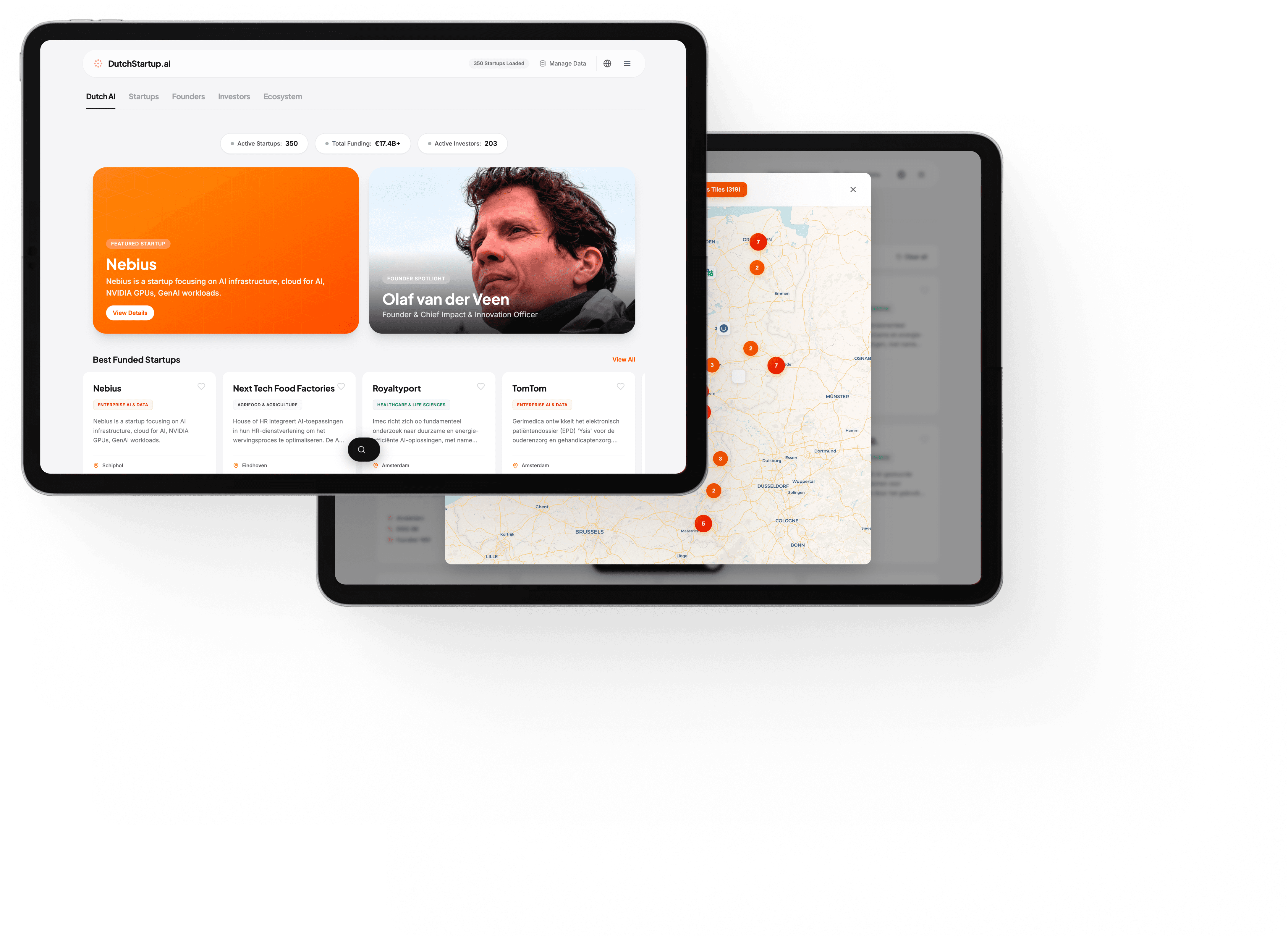
DutchStartup.AI
Secure your place in the Dutch AI ecosystem now
Founding Partner

Powered by

Join
DutchStartup.AI
Secure your place in the Dutch AI ecosystem now
Founding Partner
Powered by
Join
DutchStartup.AI
Secure your place in the Dutch AI ecosystem now
Founding Partner
Powered by
Dutch AI
Built Different
An initiative by Willem Blom & Max Pinas | Powered by Studio Hyra
Dutch AI. Built Different 2025
Dutch AI
Built Different
An initiative by Willem Blom & Max Pinas
Powered by Studio Hyra
Dutch AI. Built Different 2025
Dutch AI
Built Different
An initiative by Willem Blom & Max Pinas | Powered by Studio Hyra
Dutch AI. Built Different 2025