Founders & Startups
The Uber pioneer: Raised $100 million, internationally funded
Nov 10, 2025
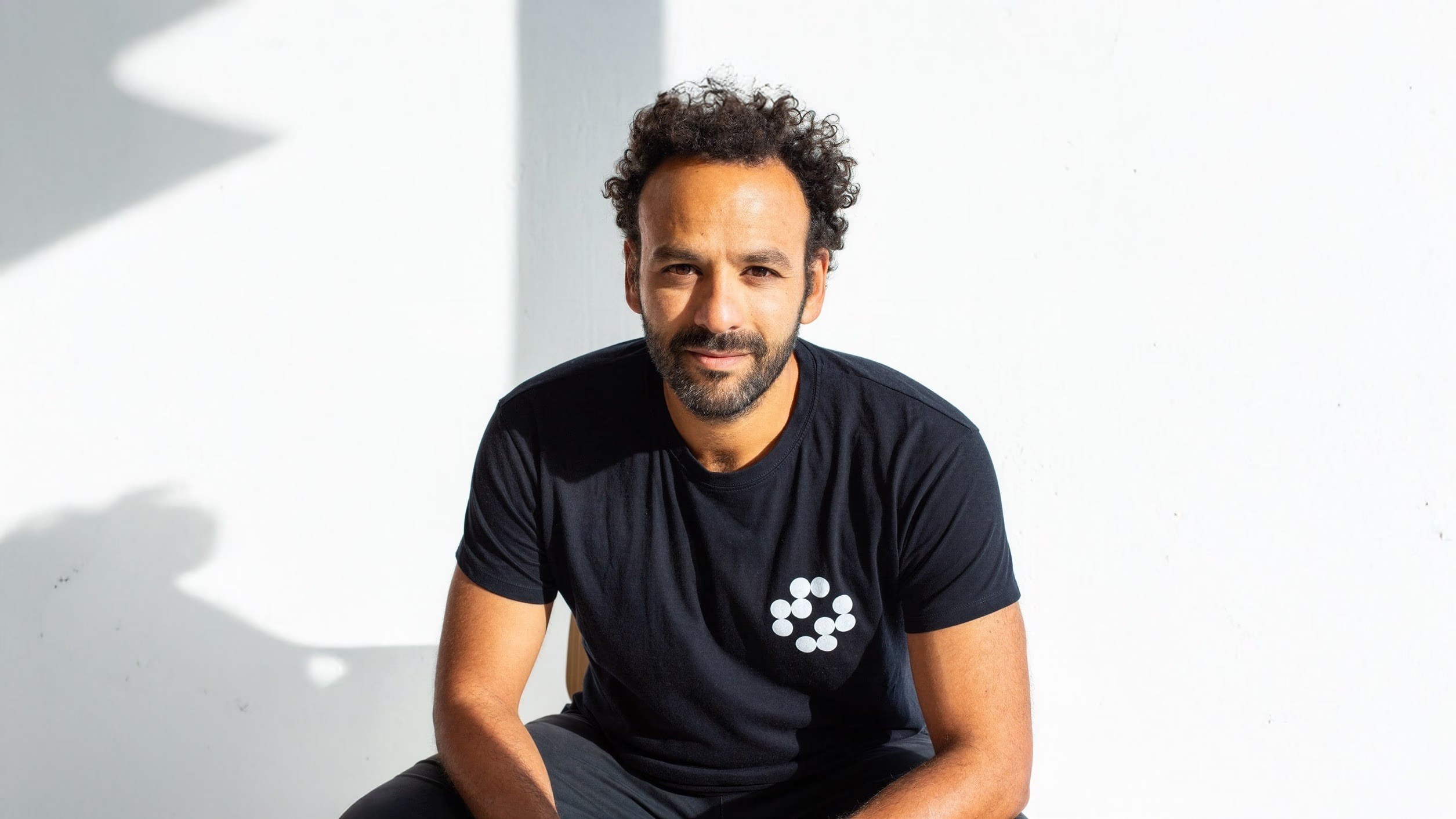
Jelle Prins, the man who built the very first Uber app, has a new mission: redesigning life itself. His startup, Cradle, uses generative AI to create proteins, a technology described as "Photoshop for molecules." With $73 million in recent funding, Cradle has the potential to cure diseases and develop new, sustainable materials. Cradle's story demonstrates how Dutch founders can build world-class companies in one of the fastest-growing tech sectors.
The 'Photoshop for molecules'
Traditionally, designing new proteins is a slow, expensive, and unpredictable process. Scientists often spend months or even years in the lab with 'trial and error', with a success rate of only 1% being considered a victory. Cradle's platform, co-founded by Prins in 2021, fundamentally changes this. By leveraging generative AI, scientists can now achieve in days or weeks what previously took years. The platform enables them to 'program' proteins for specific functions, such as breaking down plastics, capturing CO2, or targeting cancer cells.
The market for 'protein engineering' is estimated to exceed $4 billion in 2024 and is expected to grow to more than $14 billion by 2030 [1]. The broader market for AI in drug development is even larger, with an expected value of over $16 billion by 2034 [2]. Cradle is positioned at the intersection of these two exponentially growing markets, with technology that has the potential to revolutionize the pharmaceutical industry, agriculture, and materials production.
"If we are successful, there are a million companies that are all going to solve a piece of the climate problem with our technology," said Jelle Prins in an interview with Innovation Origins [3].
From taxi app to biotech
The journey of Jelle Prins to the forefront of the biotech revolution is remarkable. In 2008, as a student in New York, he was approached by the founders of Uber to build the very first app for their groundbreaking taxi service. He was Uber's first employee, and his design of the 'fixed pin in the middle, move the map' interface is now the standard in countless apps. After a successful career at Uber, Booking.com, and as the founder of his app development company Moop, which was later acquired by Uber, Prins sought a new challenge with even greater impact.
He found it in the world of synthetic biology. Together with CEO Stef van Grieken and a team of scientists and engineers, he founded Cradle. Prins sees a clear parallel between his work at Uber and his current mission:
"I think Cradle has the potential to make more of an impact than Uber did," he told Innovation Origins [3].
Raised $100 million, internationally funded
In November 2024, Cradle raised an impressive $73 million in a Series B funding round, led by US investor IVP (Institutional Venture Partners). Existing investors Index Ventures (UK/European) and Kindred Capital (UK) also participated. In total, Cradle has now raised over $100 million, making it one of the best-funded AI biotech startups in Europe [4].
Funding Round | Amount | Leading Investor | Other Investors |
|---|---|---|---|
Seed (2022) | ~$9M | Index Ventures (UK/EU) | - |
Series A (2023) | $24M | Index Ventures (UK/EU) | Kindred Capital (UK) |
Series B (2024) | $73M | IVP (US) | Index Ventures, Kindred Capital |
What does this mean for new startups?
Cradle's story offers concrete lessons for Dutch startups looking to follow in Prins's footsteps. The opportunities are considerable: the AI-biotech market is exploding, and Cradle proves that Dutch founders can build world-class companies. The platform model that Cradle employs, offering technology as a service to pharmaceutical companies and biotech labs, creates a new category. This opens the door for startups focusing on related areas such as AI for drug discovery, material science, or agritech.
However, the challenges are equally real. Biotech startups have a longer development cycle than software startups. Cradle was founded in 2021 and has now, four years later, raised $100 million but is not yet profitable. For founders, this means a marathon, not a sprint. Moreover, later funding rounds (Series A of $24 million, Series B of $73 million) require access to international capital markets. This means startups must think and network internationally from day one.
Factor | Opportunity | Challenge |
|---|---|---|
Market Growth | AI-biotech growing to $14+ billion (2030) | Competition from well-funded international players |
Capital | Track record attracts international VCs | Late-stage funding requires international networks |
Talent | Strong tech and biotech knowledge base in NL | Long development cycle (4+ years to scale) |
Platform Model | Scale advantage through technology-as-a-service | High initial R&D costs |
Simultaneously, Cradle demonstrates that platform technology is a powerful strategy. Instead of developing one drug or material, Cradle builds a platform that thousands of companies can use. This model has a higher scaling advantage and can grow faster than traditional biotech companies. For new startups, the lesson is: think in platforms, not products. And build an international network from day one, as the biggest growth opportunities lie in access to global capital markets and customers.
The question for the Dutch ecosystem is how to facilitate more such success stories. Cradle proves that the talent and innovation are present. Now it's a matter of mobilizing the infrastructure, networks, and capital that founders need to grow from local startups to global players.
Max Pinas
Founder Dutchstartup.ai & studio hyra
References
[1] Grand View Research (2024). Protein Engineering Market Size And Share Report, 2030. https://www.grandviewresearch.com/industry-analysis/protein-engineering-market
[2] Biospace (2025). AI in Drug Discovery Market Size to Worth USD 16.52 Bn by 2034. https://www.biospace.com/press-releases/ai-in-drug-discovery-market-size-to-worth-usd-16-52-bn-by-2034
[3] Innovation Origins (2024). Jelle Prins, Cradle founder: 'I thought my peak had passed after leaving Uber'. https://innovationorigins.com/en/jelle-prins-cradle-bio-founder-i-sometimes-thought-my-peak-had-passed-after-leaving-uber/
[4] TechCrunch (2024). Cradle builds out its protein-design AI platform (and wet lab) with $73M in new funding. https://techcrunch.com/2024/11/26/cradle-builds-out-its-protein-design-ai-platform-and-wet-lab-with-73m-in-new-funding/
Read More


Join
DutchStartup.AI
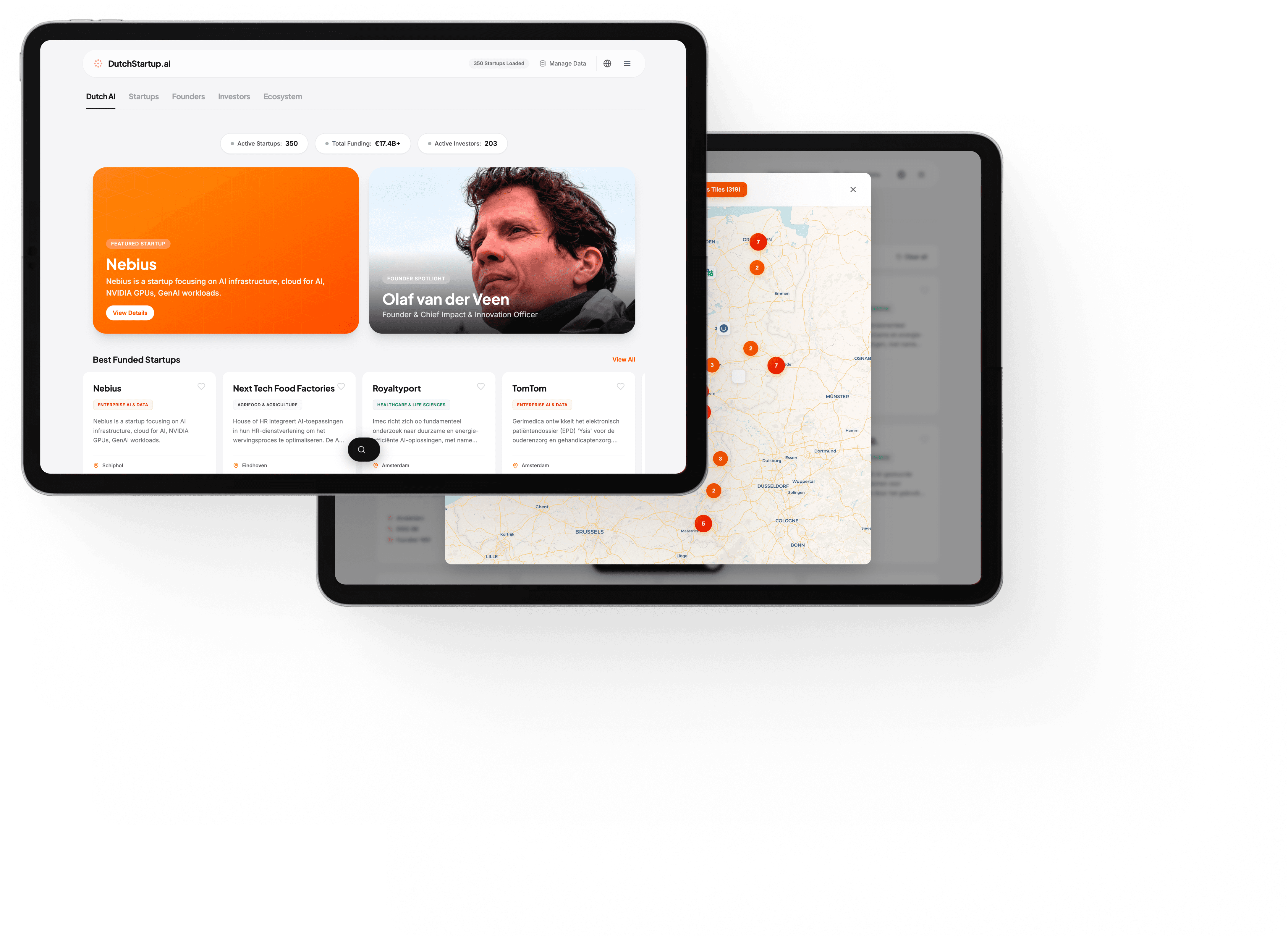
Secure your place in the Dutch AI ecosystem now
Founding Partner

Powered by

Join
DutchStartup.AI
Secure your place in the Dutch AI ecosystem now
Founding Partner
Powered by
Join
DutchStartup.AI
Secure your place in the Dutch AI ecosystem now
Founding Partner
Powered by
Dutch AI
Built Different
An initiative by Willem Blom & Max Pinas | Powered by Studio Hyra
Dutch AI. Built Different 2025
Dutch AI
Built Different
An initiative by Willem Blom & Max Pinas
Powered by Studio Hyra
Dutch AI. Built Different 2025
Dutch AI
Built Different
An initiative by Willem Blom & Max Pinas | Powered by Studio Hyra
Dutch AI. Built Different 2025