Founders & Startups
Is this the greenest AI in the world?
Feb 2, 2026

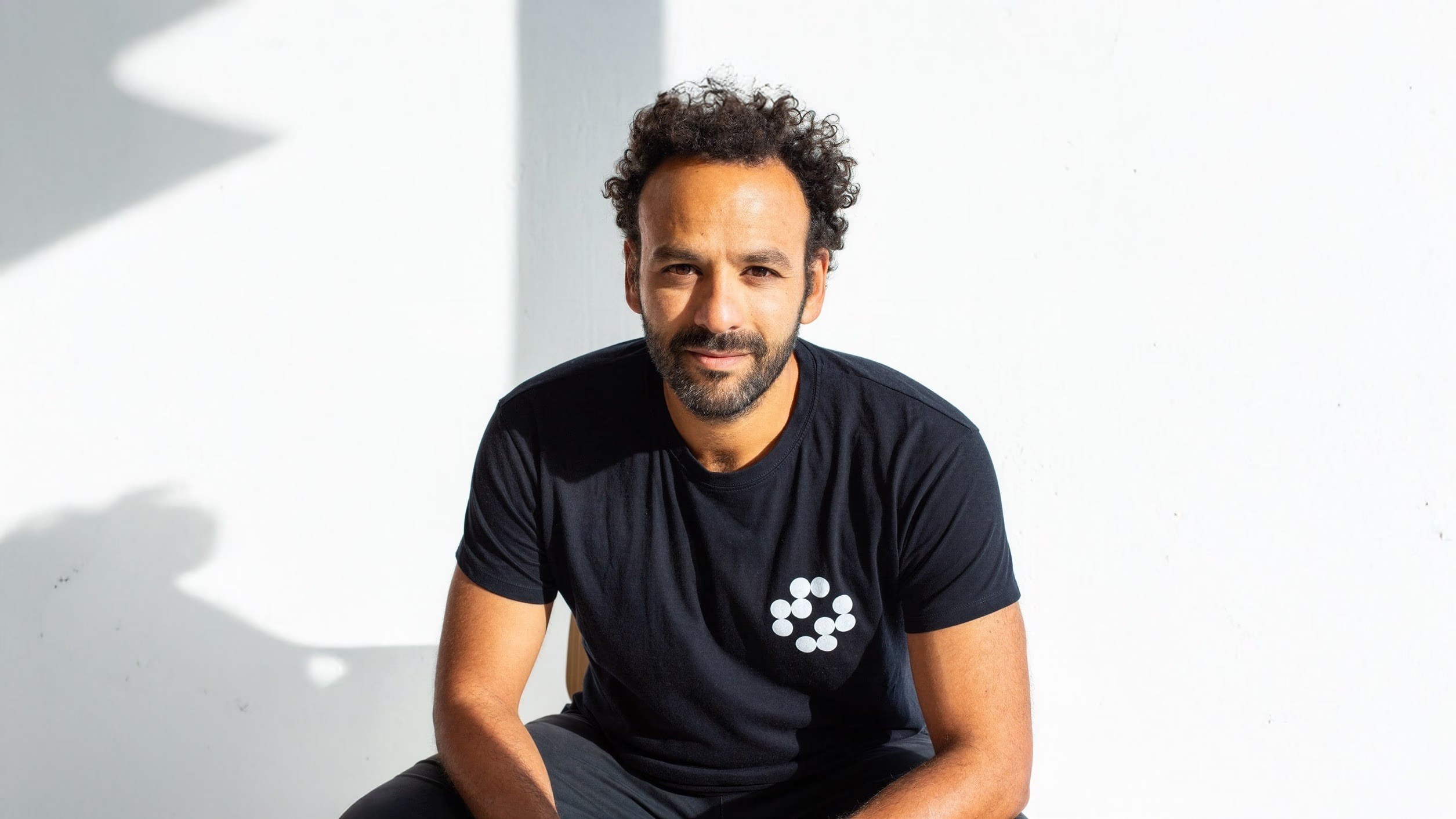
Robert Keus faced a problem he couldn't solve for his clients. He had been building AI solutions for years. But when clients asked a simple question, "how much energy does this actually cost?", he had no answer. Nobody did.
"People are trying to estimate ChatGPT's energy consumption," Keus told Change.inc earlier this year. "That's just not possible. For that, you really need access to the raw data from the chips."
The tipping point came about a year ago when the Chinese open-source model DeepSeek emerged. "From that moment, open-source models have become better and better," says Keus. Good enough to build on. Good enough to host yourself. Good enough to actually measure what's happening inside. So he built GreenPT, a platform that shows you in real-time how much energy each AI conversation costs.
A spell check on a document? 1.57 watt-hours. An in-depth conversation about your marketing strategy? More. How much more depends on something most people don't know. And that's where it gets interesting for anyone building AI products.
What no one tells you about AI conversations
Every time you ask a follow-up question in ChatGPT or another AI chat, the model doesn't just process your new question. It reprocesses the entire conversation. Every previous question, every previous answer, everything is run through the model again. Keus is straightforward: "If you're asking a question on a different topic, there's no need for it, and you would be better off starting a new conversation."
Consider what that means at scale. A company with 500 employees loosely chatting with AI all day, each in one long conversation window, exponentially burns more computing power with each follow-up. Not because the questions are getting harder, but because the context window keeps growing. It's like copying your entire archive cabinet every time you want to add one document to it.
These kinds of insights only become visible when you start measuring. And measuring is exactly what GreenPT does differently than the rest.
Servers in swimming pools (and why that wasn't enough)
GreenPT started on LeafCloud, a Dutch startup with a concept that sounds almost too elegant. They place servers in the technical rooms of apartment buildings, nursing homes, and swimming pools. The servers have to run anyway. Buildings need heat anyway. LeafCloud captures the waste heat from the computation and uses it to heat water. The result is an energy efficiency that's about ten times better than a conventional datacenter.
For a founder who wants to build the world's greenest AI platform, it was a perfect match. Until it wasn't anymore.
LeafCloud couldn't scale fast enough. "We grew to a point where we needed infrastructure for a thousand paying customers," says Keus. LeafCloud's distributed model, beautifully in theory, couldn't deliver that. He faced a choice that every founder building on principles eventually encounters: stay pure and stay small, or compromise and grow.
He chose Scaleway, a French provider. Air-cooled data centers, largely renewable energy, some nuclear energy that is compensated elsewhere. "That's why it's 100 percent sustainable energy on paper," Keus told Change.inc, choosing the words "on paper" carefully. No heat reuse, no revolutionary infrastructure. Just solid, certified, scalable.
For someone who wanted to build the greenest AI provider in the world, it's the kind of pragmatic decision that doesn't make for a great headline. But it's honest. And as it turns out, honesty may be worth more than perfection.
Why this matters when building AI in the Netherlands
The EU AI Act now requires energy consumption reporting. Dutch datacenters already consume more than four percent of the country's electricity. Most AI startups here have no idea what their products actually cost in energy terms.
GreenPT's CTO Cas Burggraaf squeezes 20 to 30 percent more efficiency out of their stack through model compression, quantization, and workload distribution. They run open-source models from Mistral and OpenAI. The competitive advantage isn't in the model. It's in how efficiently you run it.
The platform runs three things: a chat interface, an API for developers, and a tool that allows companies to build their own chatbots. Everything is self-hosted on European infrastructure, no external API calls. User data never leaves their servers. In a market where American platforms continue to stumble over GDPR, and the EU AI Act now requires energy reporting, that combination quietly becomes a selling point.
About a thousand users now pay for GreenPT. Government institutions, mission-driven organizations, people who care about where their data is stored. Not huge numbers, but enough to prove there's a market. "We use AI too much for simple things," says Keus. He knows that every new customer increases the footprint. The models are not sustainably trained. No one's are. But inference, actually running queries, is where most of the energy consumption lies and where you can still make a difference.
Google recently published real energy data for the first time. A median Gemini query now costs 0.24 watt-hours. A year earlier, the same query cost 33 times more. This moves so quickly, and so little is actually known about it.
So here is the question. If energy reporting becomes mandatory, and it will, can you tell your customers what your product costs to run? GreenPT can already do that. Can you?
Willem Blom
Founder Dutchstartup.ai
References
[1] Change.inc (2026). Robert Keus wil milieu-impact van AI transparant maken met GreenPT. https://www.change.inc/ict/robert-keus-wil-met-greenpt-milieu-impact-van-ai-transparant-maken-we-gebruiken-ai-te-veel-voor-simpele-dingen
[2] LeafCloud (2020). Green Cloud, energy use, and residual heat. https://leaf.cloud/blog/green-cloud-energy-use-and-residual-heat-what-actually-makes-a-cloud-sustainable
[3] Scaleway (2025). Our environmental commitment. https://www.scaleway.com/en/environmental-leadership/
[4] AI World (2025). GreenPT builds AI chat platform on European renewable infrastructure. https://aiworld.eu/story/greenpt-builds-ai-chat-platform-on-european-renewable-infrastructure
[5] MIT Technology Review (2025). In a first, Google has released data on how much energy an AI prompt uses. https://www.technologyreview.com/2025/08/21/1122288/google-gemini-ai-energy/
[6] European Commission (2025). European approach to artificial intelligence. https://digital-strategy.ec.europa.eu/en/policies/european-approach-artificial-intelligence
Read More


Join
DutchStartup.AI
Secure your place in the Dutch AI ecosystem now

Founding Partner

Powered by

Join
DutchStartup.AI
Secure your place in the Dutch AI ecosystem now
Founding Partner
Powered by
Join
DutchStartup.AI
Secure your place in the Dutch AI ecosystem now
Founding Partner
Powered by
Dutch AI
Built Different
An initiative by Willem Blom & Max Pinas | Powered by Studio Hyra
Dutch AI. Built Different 2025
Dutch AI
Built Different
An initiative by Willem Blom & Max Pinas
Powered by Studio Hyra
Dutch AI. Built Different 2025
Dutch AI
Built Different
An initiative by Willem Blom & Max Pinas | Powered by Studio Hyra
Dutch AI. Built Different 2025