Founders & Startups
The Stockholm Mystery: How Sweden Became Europe's Unicorn Champion
Oct 15, 2025
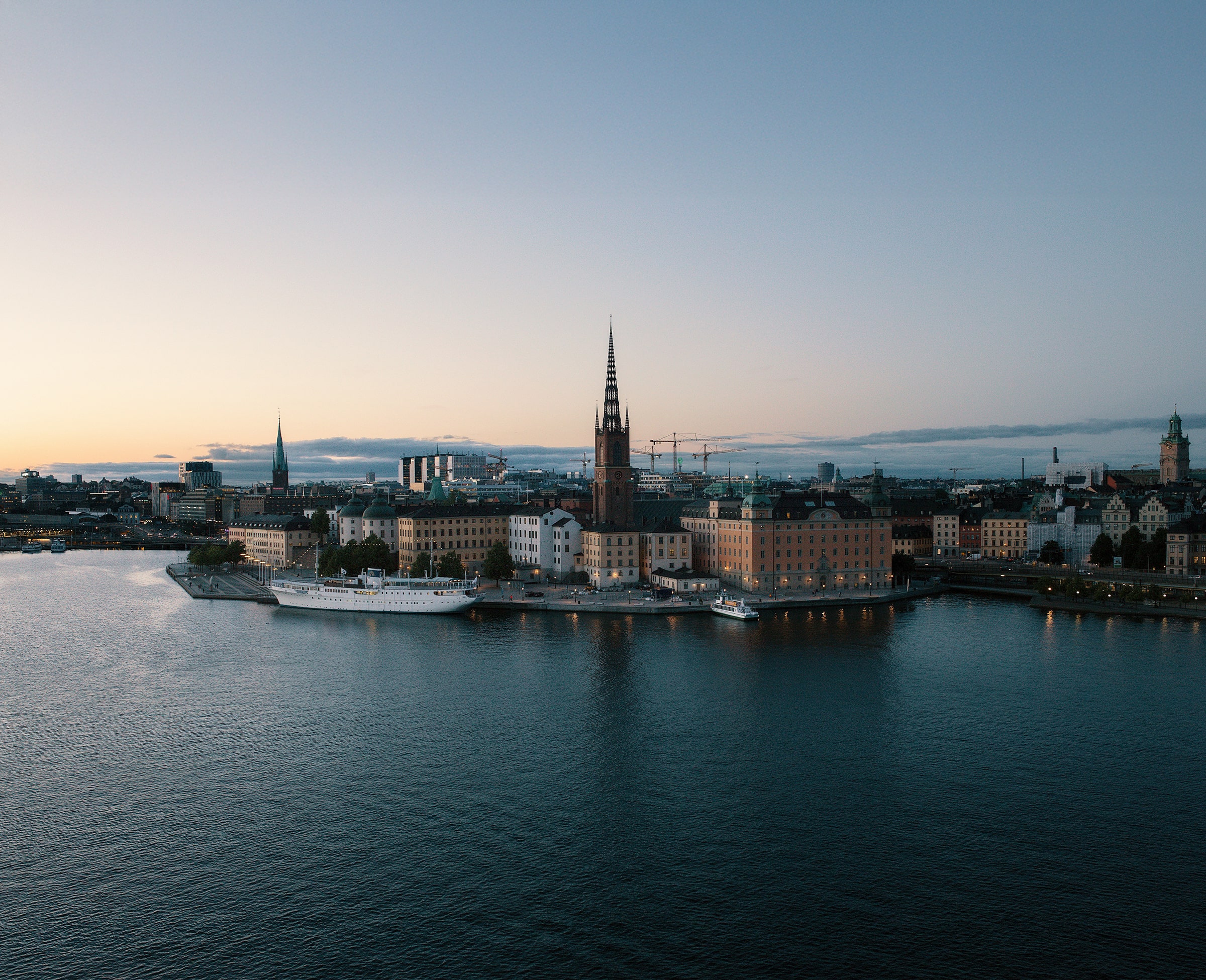
The statistic that wakes up Europe
Here is a fact that will make you scratch your head. Sweden, with only 10.5 million inhabitants, has produced 41 unicorns. The Netherlands, with 17.5 million people, has 15. The United Kingdom, with 67 million, has 51.
Per capita, this means a Swede is four times more likely to build a unicorn than a Brit, and 2.7 times more likely than a Dutch person.
Country | Unicorns | Population (million) | Unicorns per million |
|---|---|---|---|
Sweden | 41 | 10.5 | 3.9 |
Netherlands | 15 | 17.5 | 0.9 |
UK | 51 | 67.0 | 0.8 |
Germany | 31 | 84.0 | 0.4 |
France | 29 | 68.0 | 0.4 |
The secret does not lie in the size of the capital, but in something much more fundamental. How a country deals with success.
The Adalberth phenomenon from billionaire to philanthropist
The answer to Sweden's success starts with a story you won't hear anywhere else in the world. Niklas Adalberth, co-founder of Klarna, had a stake worth $2.5 billion in 2021. Instead of keeping it, he sold most of it to fund his Norrsken Foundation.
"When I started Klarna, I believed that money equaled happiness. It was actually very selfish from the start," Adalberth tells Business Insider. "But when I was living this dream, I felt bad. Hey, I can really not tell the difference between this wine and the junk wine I have at home."
After an eye-opening trip to Las Vegas, where he spent thousands of dollars on luxury but felt empty, he decided to turn his life around. He sold his Klarna shares and invested €140 million in Norrsken, not as an investment, but as a gift to the next generation of entrepreneurs.
"I have all this luck in my life, and more money makes no sense. And I really want to be able to look in the mirror and see that I have created something positive," he explains.
This is not unique in Stockholm. It's the norm that has infected all of Sweden.
Daniel Ek from Spotify to European defense AI
But Adalberth is not the only one. Daniel Ek, the founder of Spotify, invested €600 million in June 2025 in Helsing, a European AI defense company, through his Prima Materia fund. The investment made him chairman of the company developing AI-driven drones and combat systems.
"As Europe rapidly strengthens its defense capabilities in response to changing geopolitical challenges, there is an urgent need to invest in advanced technologies that ensure its strategic autonomy and security preparedness," Ek said in a statement.
This is not just business. It's a statement about European technological sovereignty. Ek uses his Spotify success to strengthen Europe's defense AI, a perfect example of how Swedish founders reinvest their profits in strategic sectors.
Lovable from CERN to the world's fastest-growing AI startup
The latest addition to Stockholm's unicorn club is Lovable, founded by Anton Osika and Fabian Hedin. Their story shows how Sweden is nurturing a new generation of AI founders.
Osika, 34, did not start his career as an entrepreneur but as a physicist. He studied at the prestigious KTH Royal Institute of Technology and went to work at CERN, the world's largest particle physics laboratory in Switzerland. But after a few months, he had enough.
"CERN had an army of thousands of the best physicists in the world, but I quickly began to think that the slow work on 'impossible projects' like searching for dark matter was a waste of human potential," Osika tells Forbes. "The realization was that you have much, much more impact in industry by building companies."
After a detour through a trading firm in Stockholm and an AI startup, Osika founded Lovable in 2023. The company developed vibe coding, an AI tool that allows anyone to build software without knowing how to code. In July 2025, Lovable was valued at $1.8 billion, making it the fastest-growing software startup in Europe ever.
"People are natural builders, but being able to write code, or having access to capital, has been the defining part of being able to build software," says Osika. "People understand people, and Lovable is this tool to bring ideas to life in minutes."
The company now generates about $1 million a day in subscriptions. Not bad for a startup that is only two years old.
Robert Falck from Russian truck factory to autonomous electric trucks
Another fascinating story is that of Robert Falck, founder of Einride. Falck worked during the day in a Russian truck factory and built a startup for nightclub guest lists at night. He also collects old books and once correctly predicted that Chinese author Gao Xingjian would win the Nobel Prize in literature.
"I worked at Volvo, where I produced diesel engines, gearboxes, and trucks. That made the challenges of the industry clear, and I realized I had a moral obligation," Falck tells TechCrunch. "The heavy freight industry accounts for 7% to 8% of global CO2 emissions, and the engines I helped produce contribute about 1% to global CO2 emissions. That's how large the impact of my previous position was, and I realized I was part of the problem."
Falck founded Einride in 2016, his seventh company. The company builds autonomous electric trucks without a cabin for a human driver. In 2021, Einride raised $110 million and was valued at over $1 billion.
"Starting a company makes no sense. You're either crazy or if you do it for the money, you won't make it, because there are much easier ways to earn money," says Falck. "But for me, I see CO2 emissions as the greatest challenge of our generation."
Peter Carlsson from Tesla to Europe's battery champion
Another Stockholm story worth mentioning. Peter Carlsson and Paolo Cerruti met in 2011 at Tesla's factory in Fremont, California. Both had just joined the company to lead the supply chain. Six years later, they founded Northvolt with the mission to build Europe's first gigafactory for batteries.
Carlsson had previously worked at NXP Semiconductors, where he was responsible for procurement and outsourcing. At Tesla, he became Vice President Supply Chain. But he saw an opportunity to make Europe independent from Asian battery producers.
"We wanted to build Europe's first gigafactory and prove that you can make sustainable batteries with renewable energy," said Carlsson in interviews. Northvolt eventually raised more than $2.75 billion and was valued at $12 billion, making it one of Europe's largest unicorns.
The company is now building factories in Sweden, Germany, and Poland, and has contracts with BMW, Volkswagen, and Volvo.
The Swedish paradox why giving makes you richer
What these stories have in common is something rarely seen in other countries. Swedish founders see their success not as an endpoint but as a starting point. They use their profits to fund and guide the next generation.
Adalberth's Norrsken House in Stockholm now houses 450 employees from impact startups. Ek not only invests in defense AI but also in dozens of other European startups through his Prima Materia fund. Carlsson advises young cleantech founders. Falck regularly speaks at conferences about sustainability.
"What I'm trying to do with the foundation is see if we can make impact entrepreneurs the next role models," says Adalberth. "Maybe we can get top talent to tackle real problems and not create yet another addictive computer game or yet another online casino."
The result? Sweden now has a self-reinforcing national ecosystem where every new unicorn funds and guides the next generation, no matter where in the country they are.
Germany's smart "AI made in Germany" strategy
Germany is playing the game differently than all the others. With the "AI made in Germany" program, the country is investing €3 billion (later expanded to €5 billion) in a national AI strategy that prioritizes quality over speed.
"With an AI offensive, we want to generate 10% of our economic output based on AI by 2030 and make AI an important tool in key areas," the German government announced in July 2025.
The smart thing about the German approach? They position "AI made in Germany" as a quality brand, just like "Swiss made" or "German engineering". They don't compete on speed or scale, but on reliability and precision.
The result is that 42% of Berlin developers are working on AI, 30% more than in the US. Germany is creating a national AI identity instead of just a capital hub.
The European reality check
Let's be honest about the rest of Europe. Despite all the nice talks about innovation, the reality is that European startups are 40% less likely to get funding after five years than their American counterparts.
"Despite the world-class talent, global ambition, and unique strengths of the European startup ecosystem, it is still absurdly difficult to build here," the founders of Stripe and Wise complain in an open letter to the EU.
The figures support their frustration:
Europe: $45 billion venture capital in 2023
US: $120 billion
China: $48 billion
The Netherlands' choice learning from Stockholm
The Netherlands faces a crucial choice. The country has hundreds of AI-producing companies according to CBS, with a strong concentration in Amsterdam. But it still lacks the systematic reinvestment culture of Sweden.
ASML is already showing the way with their €1.3 billion investment in the French AI company Mistral AI. It signals that Dutch tech giants are willing to invest large sums in the future of Europe. The question now is whether more Dutch successes will follow this example.
The Dutch formula Swedish pay it forward + German branding
The Netherlands can combine the best of both worlds:
The Swedish pay it forward mentality where successful founders systematically reinvest in the next generation
The German branding approach: "AI made in Netherlands" as a quality label for responsible, reliable AI
Imagine Dutch tech successes adopting the Swedish model. Not investing in quick wins or wrappers, but in fundamental technology that truly makes a difference.
The future Netherlands' Swedish moment
"In the startup world, momentum is everything. Anything that slows you down not only slows you down, it kills you by preventing you from reaching escape velocity," warns Andreas Klinger of Prototype Capital.
The Netherlands has all the ingredients for its own Swedish moment. The talent, the companies, and the international connections. It just lacks the national culture of reinvestment and a clear narrative on what the Netherlands stands for in AI.
The question is not whether the Netherlands can compete with Sweden. The question is whether it has the courage to copy Sweden's real secret: a whole country working together, where successful entrepreneurs see their next mission as enabling others' success.
Because ultimately, it's not about the size of your capital. It's about the strength of your national narrative and the willingness of your winners to help the next generation win.
Sweden understood that. When will the Netherlands?
Max Pinas
Founder Dutchstartup.ai & studio hyra
References
[1] StartupBlink (2025). Top unicorn cities and countries in 2025.
[2] Business Insider (2021). Klarna's Niklas Adalberth could have been a billionaire. He chose philanthropy instead.
[3] Forbes (2025). Vibe coding turned this Swedish AI unicorn into the fastest growing software startup ever.
[4] TechCrunch (2021). Einride founder Robert Falck on his moral obligation to electrify autonomous trucking.
[5] CBS (2025). AI-monitor 2024.
[6] CNBC (2025). Spotify's Daniel Ek leads investment in defense startup Helsing.
Read More

Join
DutchStartup.AI
Secure your place in the Dutch AI ecosystem now
Founding Partner

Powered by

Join
DutchStartup.AI
Secure your place in the Dutch AI ecosystem now
Founding Partner
Powered by
Join
DutchStartup.AI
Secure your place in the Dutch AI ecosystem now
Founding Partner
Powered by
Dutch AI
Built Different
An initiative by Willem Blom & Max Pinas | Powered by Studio Hyra
Dutch AI. Built Different 2025
Dutch AI
Built Different
An initiative by Willem Blom & Max Pinas
Powered by Studio Hyra
Dutch AI. Built Different 2025
Dutch AI
Built Different
An initiative by Willem Blom & Max Pinas | Powered by Studio Hyra
Dutch AI. Built Different 2025