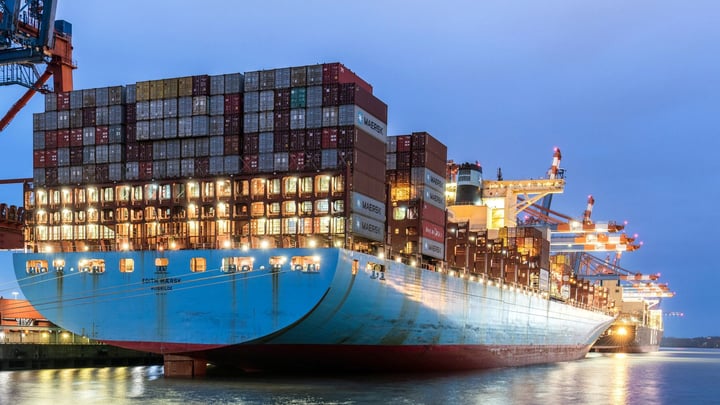
One pattern stands out in the Dutch startup landscape: logistics and mobility startups disproportionately choose the Rotterdam, The Hague and Westland region. That is unlikely to be coincidental. The Port of Rotterdam is the largest in Europe, Schiphol is an hour's drive away, and the region is home to the headquarters of dozens of major shippers, freight forwarders and logistics service providers. That combination attracts startups looking to test and scale their technology in an environment where demand for automation is immediately visible and tangible.
The concentration is not limited to one type of company. Robotics startups, AI companies for fleet management, autonomous charging systems and baggage-recognition software are all located within the same broad corridor between the coast and the city. This points to an ecosystem that has formed around concrete infrastructure rather than around a university or a single fund.
The port as testing ground and first customer
For a logistics startup, finding an early customer with scale is the hardest part. The Port of Rotterdam offers exactly that in one package: the Port of Rotterdam Authority has its own innovation programme, the terminals handle millions of containers a year, and the logistics service providers operating there are under structural pressure to cut costs and automate processes.
Rocsys from Rijswijk is a concrete example of this. The company develops hands-free autonomous charging for electric vehicles and fleets, a technology that directly aligns with the electrification of port tractors and distribution vehicles. Rocsys has raised over €42 million to date in a Series A round, and proximity to major logistics clients plays a role in that: investors see proof of market demand more quickly when the first pilots are operating just around the corner.
The same applies to BagsID from Schiphol-Rijk, which uses algorithms for baggage recognition at airports. The choice of Schiphol-Rijk as a base is strategic: Schiphol is simultaneously a potential customer, a testing environment and a reference for international airports. The company raised a seed round of €6.1 million in 2022.
Delft as a technological breeding ground
Alongside the port, Delft University of Technology plays a clear role. Fizyr, founded in 2014 and based in Delft, develops vision software that enables industrial robots to perform complex logistics tasks, such as recognising and gripping unstructured parcels on a conveyor belt. The software addresses a problem that has plagued the logistics sector for years: mechanically automating picking processes works with traditional robotics, but as product variety increases, the system breaks down. Fizyr tackles this with deep learning.
TU Delft not only supplies talent but also a network of industry contacts through research programmes and collaborations with port and manufacturing companies. This makes the region attractive to startups that need access to technical staff and pilot partners at an early stage.
Automation as the common denominator
What connects the companies in the region is their focus on physical automation within the supply chain. This distinguishes them from the SaaS-oriented software startups that are more concentrated in Amsterdam. Robots, cameras, charging robots, positioning systems: these are all products that need to operate in a warehouse, on a terminal or within a fleet, not just in a browser.
Smart Robotics from Best and Accerion from Venlo are geographically outside the Rotterdam corridor, but illustrate how demand for physical automation is spreading throughout the entire logistics chain. Smart Robotics builds robotic systems for palletising and order picking and raised a Series A of €8.7 million in early 2024. Accerion develops infrastructure-free positioning for robots with sub-millimetre accuracy, a technology that increases the deployability of autonomous vehicles in warehouses without the need for expensive floor markings.
Slightly further from the core is AM-Flow in Amsterdam, which automates post-production workflows for 3D printing companies. The company demonstrates that the automation logic of the logistics sector is also permeating adjacent manufacturing industries.
What the ecosystem is still missing
The concentration of supply and demand in the region also has a downside. Many startups are heavily dependent on a limited number of large clients in the port and aviation sectors. This makes the early growth phase relatively predictable, but scaling internationally requires a different approach than serving a single mainport. Companies such as Fizyr and Rocsys show that this step is achievable, but it demands a sales strategy that extends beyond the familiar networks in Rotterdam and Schiphol-Rijk.
In addition, funding rounds in the region are relatively modest compared with the capital intensity of the hardware these companies build. Series A rounds of under ten million euros are on the tight side for robotics and hardware companies when it comes to international scaling. This points to a funding gap that is likely to make itself felt in the years ahead.
Implications for the broader ecosystem
The clustering around Rotterdam, The Hague and Schiphol shows that physical infrastructure acts as a magnet for deep-tech startups in a way that governments and funds can only steer to a limited extent. Ports, airports and distribution networks naturally generate demand for automation, and startups that pick up on that demand early gain access to pilot environments that are hard to find elsewhere in Europe.
For policymakers and regional development organisations, this is an argument for actively supporting the connection between port infrastructure and the startup ecosystem, not through subsidies for arbitrary tech companies, but through programmes that concretely facilitate the step from pilot customer to international reference. For investors elsewhere in Europe, the region signals that the Netherlands, outside Amsterdam, hosts a second cluster with its own sector-specific logic.