Nine of the 21 Dutch fintech startups are located in the Amsterdam Metropolitan Area
·4 min read
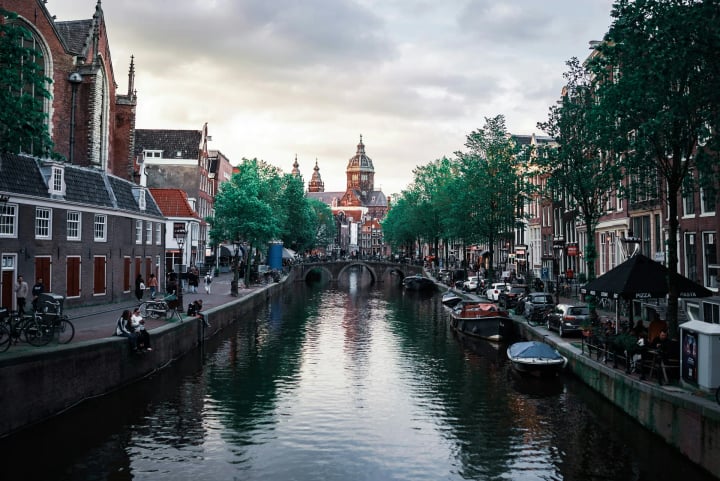
The Dutch fintech sector is geographically unevenly distributed. Of the 21 companies in this overview, more than half have established themselves in or around Amsterdam. The remainder are spread across cities such as Utrecht, The Hague, Haarlem and Nieuwegein. That distribution is not coincidental, but reflects where capital, talent and existing financial infrastructure converge.
Amsterdam is home to nine of the 21 companies: Duna, Silverflow, Stacks, Owlin, ThreatFabric, Neno and Fraudio are among that group, with Haarlem as a direct neighbour through BOTS Capital. The other cities follow at a distance. The Hague contributes two companies, Finturi and AdviceRobo. Utrecht has FRISS, Nieuwegein has Flytxt.
What makes Amsterdam so attractive to fintech companies, and what does the regional distribution say about the structure of the Dutch ecosystem?
Amsterdam as a historic financial centre
Amsterdam was already a hub for financial innovation centuries ago. The city was home to the world's first stock exchange and central bank, and that foundation has never entirely eroded. The Dutch banking sector still has its centre of gravity there, and major names such as ING, ABN AMRO and Adyen are all based in the city.
That presence of established financial institutions attracts fintech companies seeking corporate clients. Silverflow, which provides payment infrastructure to acquirers and merchants, and Owlin, which monitors supplier and counterparty risks for financial institutions, are examples of this. Duna, founded in 2023 by former Stripe employees, raised more than 40 million euros and serves clients such as Plaid, CCV and SVEA Bank. That is more easily achieved from a city where those clients are already present.
Talent, language and international accessibility
Amsterdam attracts international technical talent, in part because the Netherlands ranks highly for English-language proficiency. This makes it easier for founders and employees from abroad to set up here. Stacks, founded in 2024 and targeting accounting teams worldwide, raised ten million euros in seed funding in early 2025. ThreatFabric, which detects fraud and malware in online banking for around sixty million customers, was founded in 2015 and continued to grow in Amsterdam with an international client base.
Following the Brexit referendum, several foreign fintech companies chose Amsterdam as their European headquarters. This further strengthened the cluster and made the city more attractive to new entrants who benefit from the network density already in place.
Regulation as a location factor
De Nederlandsche Bank and the Authority for the Financial Markets (AFM) are regarded in Europe as relatively accessible regulators for innovative financial services providers. This lowers the barrier for startups that require a licence or registration. Fraudio, which offers AI-driven fraud detection and AML solutions for the payments ecosystem, and Neno, which automates administration for entrepreneurs, are both recently established in Amsterdam and operate in heavily regulated domains. The proximity of regulators and legal expertise makes Amsterdam practically attractive for companies of this kind.
Outside Amsterdam: specialisation and niches
The companies outside the Randstad core show that geographic distribution sometimes goes hand in hand with substantive specialisation. FRISS in Utrecht, founded in 2006, automates fraud detection specifically for non-life insurers and raised nearly sixty million euros in a Series B in 2024. Flytxt in Nieuwegein focuses on customer value management for telecoms and financial services and has been operating since 2008.
The Hague has its own profile. AdviceRobo, founded in 2013, combines behavioural science and data to improve credit decisions for financial institutions. Finturi focuses on electronic invoicing for freelancers and small businesses. Both companies operate in niches where they are not necessarily dependent on Amsterdam's network density, but rather on specific expertise and existing client relationships in their sector.
BOTS Capital in Haarlem offers automated investment strategies for retail investors and raised thirty million euros in a Series A. Haarlem borders Amsterdam directly and functionally forms part of the same metropolitan ecosystem.
What the distribution says about the ecosystem
The pattern in this overview aligns with broader observations about the Dutch fintech sector. Approximately one tenth of the two hundred thousand people working in the Dutch financial sector are employed at a fintech company, and the vast majority of those jobs are in Amsterdam. The city offers a combination of existing clients, investors, talent and regulatory accessibility that is harder to find elsewhere in the Netherlands.
At the same time, the distribution shows that there is room outside Amsterdam for specialised companies. Utrecht, The Hague and Nieuwegein each host companies with a clearly defined focus and their own funding history. For founders who are heavily dependent on an international network or institutional clients in the financial sector, Amsterdam remains the most logical starting point. For companies with a specific sectoral niche or an existing client network outside the Randstad, that imperative is less pronounced.
For investors and policymakers seeking to strengthen the Dutch fintech ecosystem, that duality is relevant. The Amsterdam cluster grows by reinforcing itself, while the regional distribution is largely sustained by a handful of mature companies with a long track record.
Rondom de Rotterdamse haven en de mainport-infrastructuur van de Randstad clusters een opvallend aantal AI-startups in logistiek en mobiliteit. De aanwezigheid van grote verladers, havenbeheerders en logistieke dienstverleners blijkt een concrete aantrekkingskracht te hebben op jong technologiebedrijven.
Finse venture builder Reaktor Ecosystem opent zijn eerste internationale hub in Amsterdam en zoekt ervaren founders om samen AI- en tech-consultancies op te bouwen.