The doctor who builds AI, and the Dutch search for venture courage
·4 min read
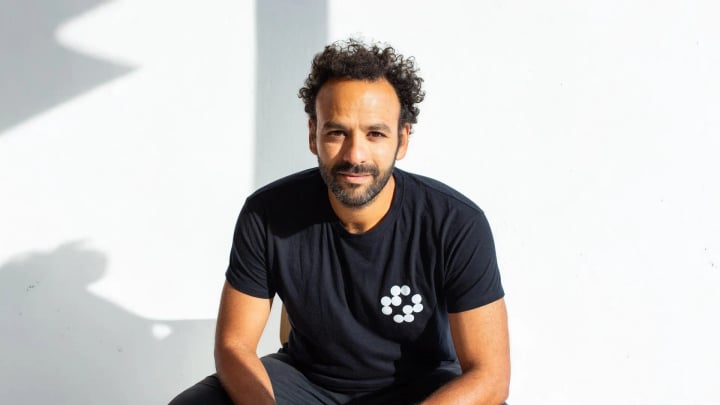
Anaesthesiologist, programmer and founder Michel Abdel Malek experienced this first-hand for years as a medical specialist. He watched as the focus shifted from the patient to the system. That frustration gave rise to his startup https://www.delphyr.ai/. It is a story that is told often, but the angle here is different. This is not a tech entrepreneur who spots an opportunity in healthcare. This is a medical specialist building a technological solution for his own, deeply rooted problem.
The search function that reinvents the EHR
Delphyr is developing an AI assistant that supports doctors and nurses with generative search, a search function that does not merely find information, but understands, summarises and enriches it. The application also listens in during a consultation, converts the conversation into a structured note, and immediately unlocks all relevant medical data from the often outdated and fragmented electronic health records (EHRs). This generative search forms the springboard for future AI applications within healthcare. The promise is a drastic reduction in administrative burden. But behind this promise lie a number of strategic choices that make the story genuinely interesting.
The sovereign choice
The first choice is technological. Delphyr is building its own language model, specifically trained on Dutch healthcare. More important still is the infrastructure. The company works with strategic European cloud partners to guarantee the best possible solution. This may seem like a technical detail, but it is a fundamental strategic move. In a sector where data security and privacy are sacrosanct, this flexible yet considered approach is a direct response to concerns about data sovereignty. By opting primarily for a European stack, Delphyr is building a 'sovereign' solution. That is a selling point that carries considerable weight for hospital executives, who bear ultimate responsibility for patient data, as well as for clinical end users.
Raising the medical bar
Where many healthcare startups opt for the fast route, Delphyr has made a different strategic choice: pursuing rigorous medical certification. It is a deliberate decision that sets the company apart. This certification is time-consuming and costly, but gives hospitals the assurance that the product meets the highest medical safety standards. For a sector that is rightly cautious about new technology, particularly when patient safety is at stake, this is not a nice-to-have but a must-have.
Strategic Pillar
Delphyr's approach
Founder profile
An insider (doctor) solving the problem from within, not an outsider.
Technology
A proprietary language model for generative search, tailored to the complexity and nuances of Dutch healthcare.
Infrastructure
Strategic partnerships with European cloud providers for optimal data sovereignty.
Certification
A deliberate choice to pursue rigorous medical certification (MDR) to build trust.
Market approach
Collaborates with the existing EHR incumbents rather than seeking to replace them.
Navigating a landscape of giants
The next strategic choice concerns the market. The Dutch hospital EHR market is a triopoly. Three companies, ChipSoft, Epic and Nexus, collectively hold 97% of the market [4]. A new player seeking to replace these systems has no chance. Delphyr is not trying to do that. Instead, it positions itself as an intelligent layer that operates on top of these rigid systems. Through partnerships with seven EHR vendors, the company is not attempting to storm the gatekeepers of healthcare data, but to keep them on side. It is a pragmatic approach that appears to be the only viable path forward in such a consolidated market.
The paradox of Dutch capital
Despite a promising start with €500,000 in seed capital and backing from investors such as Thomas Wolf (co-founder of Hugging Face), Abdel Malek exposes a painful paradox in the Dutch innovation climate.
"There is a saying among Dutch founders: we have enough capital, but what we lack is venture capital," says Abdel Malek.
The figures bear out his observation. Venture capital investment per capita in the Netherlands stood at €193 in 2024, well behind the €546 recorded in the United States [5]. Dutch pension funds, which manage vast assets, invest just 0.01% of those assets in domestic venture capital [5]. Investors are reluctant to commit in the early, high-risk phase where deep-technology companies such as Delphyr currently find themselves. They wait for proven success, yet it is precisely the lack of early-stage funding that makes that success hard to achieve.
What to watch
The Delphyr story is more than a startup story. It is a case study for the future of technological innovation in the Netherlands. The opportunity for Delphyr is clear: if the company succeeds in being among the first to lay a secure, sovereign and effective AI layer over the existing healthcare infrastructure, the potential market is substantial. The threat is twofold: the power of EHR vendors, who can close their gates, and the risk-averse investment climate, which may force the company to temper its growth ambitions or look abroad.
We are therefore particularly curious about the next steps. Will Delphyr succeed in raising a new funding round? And will it manage to convince the first major hospitals that its sovereign AI solution not only eases administrative burdens, but genuinely improves care? The answers to those questions will determine not only the future of Delphyr, but also say something about whether the Netherlands can solve its own most complex problems with its own most advanced technology.
External links open in a new tab and lead to sites outside Dutch Startup, we don't control their content.
Van de 21 Nederlandse fintech-startups in dit overzicht is de Metropoolregio Amsterdam veruit het sterkst vertegenwoordigd. Historische financiële infrastructuur, internationale talentpools en innovatievriendelijk toezicht verklaren waarom juist daar zoveel bedrijven neerslaan.
Rondom de Rotterdamse haven en de mainport-infrastructuur van de Randstad clusters een opvallend aantal AI-startups in logistiek en mobiliteit. De aanwezigheid van grote verladers, havenbeheerders en logistieke dienstverleners blijkt een concrete aantrekkingskracht te hebben op jong technologiebedrijven.
Finse venture builder Reaktor Ecosystem opent zijn eerste internationale hub in Amsterdam en zoekt ervaren founders om samen AI- en tech-consultancies op te bouwen.